

India’s digital economy stands at a transformative crossroads as we approach 2026. The country now has over 850 million internet users. This massive digital population creates unprecedented opportunities for entrepreneurs.
Digital marketing businesses require minimal investment compared to traditional ventures. You can start many of these businesses from home. The potential for growth remains enormous as Indian businesses increasingly shift their budgets online.
The market dynamics favor new entrants in 2026. Small businesses across India desperately need affordable digital marketing services. Traditional advertising channels no longer deliver the results businesses expect. This gap creates your opportunity.
This comprehensive guide explores the most profitable digital marketing business ideas for India in 2026. You will discover low-investment opportunities that align with emerging market trends. We cover everything from service-based models to product-focused ventures.
Whether you have marketing experience or you’re completely new to this industry, you’ll find actionable business ideas here. Each opportunity includes insights on investment requirements, target customers, and growth potential. The Indian digital marketing industry is projected to reach $24 billion by 2026, and you can claim your share.
Get Your Free Startup Guide
Download our comprehensive guide featuring 25 validated digital marketing business ideas specifically researched for the Indian market in 2026. Includes investment breakdowns, profit margins, and step-by-step launch plans.
Understanding India’s Digital Marketing Landscape in 2026
The digital marketing industry in India has evolved dramatically over the past few years. Traditional marketing channels continue losing effectiveness. Businesses of all sizes now recognize digital presence as essential rather than optional.
Consumer behavior patterns have shifted permanently toward online platforms. People research products online before making purchase decisions. They trust online reviews more than traditional advertisements. This fundamental change drives demand for digital marketing services.
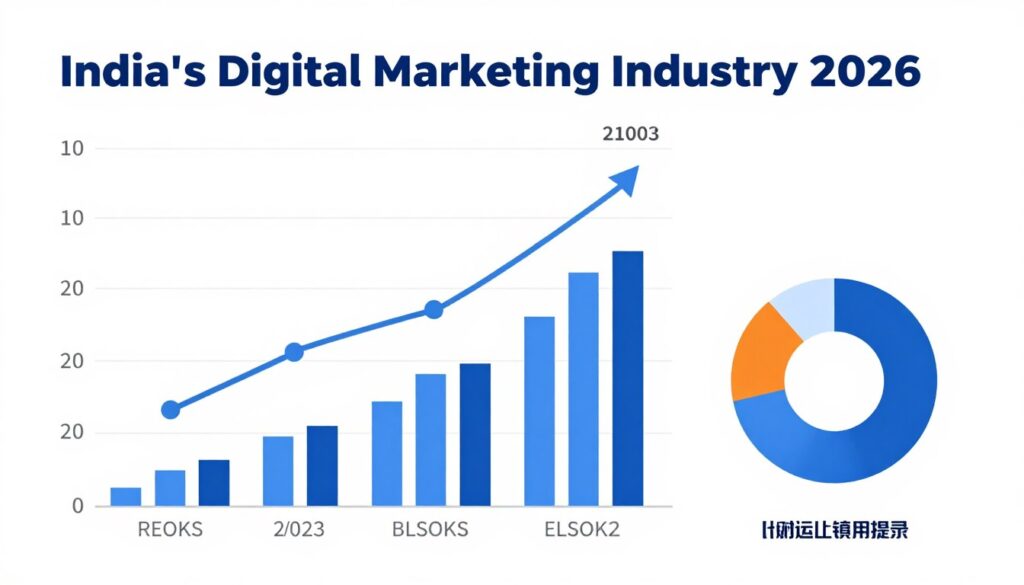
Key Market Drivers for 2026
Several factors make 2026 an ideal time to launch a digital marketing business in India. Internet penetration now reaches tier-2 and tier-3 cities at unprecedented rates. These markets remain largely untapped by professional digital marketing services.
Small and medium enterprises form the backbone of India’s economy. Most of these businesses lack in-house marketing expertise. They actively seek affordable, reliable digital marketing partners who understand local markets.
Government initiatives like Digital India continue expanding internet infrastructure. Rural internet connectivity improves year after year. This expansion creates new customer bases hungry for online visibility.
Market Opportunities
- 850+ million internet users creating massive audience pools
- SMEs investing 40% more in digital channels year-over-year
- Regional language content demand growing 300% annually
- Video content consumption up 250% on mobile devices
- E-commerce sector expanding to smaller cities rapidly
Industry Challenges
- High competition in metro cities requiring differentiation
- Client education needed about digital marketing value
- Keeping pace with rapidly changing platform algorithms
- Building trust in markets skeptical of online services
- Managing client expectations around timeline and results
Emerging Trends Shaping 2026
Artificial intelligence tools have democratized digital marketing capabilities. Small agencies can now compete with larger firms using AI-powered tools. Content creation, data analysis, and campaign optimization became more accessible than ever.
Voice search optimization gained critical importance as Hindi and regional language voice searches multiply. Businesses need help adapting their content strategies for voice-first users. This creates specialized service opportunities.
Short-form video content dominates user attention across platforms. Instagram Reels, YouTube Shorts, and similar formats drive engagement. Businesses struggle to create consistent video content, opening doors for specialized video marketing services.
Privacy regulations and cookie deprecation changed how businesses track customers. First-party data collection strategies became essential. Companies need expert guidance navigating this new data landscape.
Low-Investment Digital Marketing Business Ideas
Starting a digital marketing business doesn’t require massive capital investment. Many profitable models need only a laptop, internet connection, and specialized skills. These low-barrier entry points make digital marketing accessible to aspiring entrepreneurs across India.
The businesses described below can typically launch with investments under ₹50,000. Most costs go toward learning tools, initial marketing, and essential software subscriptions. You can scale these models as you acquire clients and generate revenue.

Social Media Marketing Agency
Social media platforms dominate how Indian businesses connect with customers. Facebook, Instagram, LinkedIn, and Twitter require consistent management and strategic content. Most small businesses lack time and expertise for effective social media presence.
You can start a social media marketing agency with minimal investment. Basic requirements include understanding platform algorithms, content creation skills, and client communication abilities. Many successful agencies begin as one-person operations serving 3-5 local clients.
This business model offers excellent scalability. You start by managing accounts manually. As you grow, you can hire virtual assistants or junior marketers. Eventually, you might develop your own agency with specialized teams for different platforms.
Getting Started
- Master 2-3 social platforms thoroughly before offering services
- Create sample campaigns showcasing your skills and style
- Start with micro-businesses willing to try new marketing approaches
- Use free tools initially: Canva for design, Buffer for scheduling
- Document results meticulously to build case studies
- Charge monthly retainers rather than per-post pricing
| Investment Component | Estimated Cost | Priority Level |
| Laptop/Computer | ₹25,000 – ₹40,000 | Essential |
| Design Tools Subscription | ₹1,000 – ₹2,000/month | Essential |
| Social Media Management Tool | ₹500 – ₹1,500/month | Important |
| Online Courses/Certification | ₹5,000 – ₹15,000 | Important |
| Website/Portfolio Development | ₹3,000 – ₹8,000 | Recommended |
| Initial Marketing Budget | ₹5,000 – ₹10,000 | Recommended |
Content Writing and Copywriting Services
Quality content remains the foundation of all digital marketing efforts. Businesses need blog posts, website copy, email campaigns, and social media content. The demand for skilled writers far exceeds the supply in India’s market.
Content writing businesses require virtually zero capital investment. Your primary assets are language skills, research abilities, and understanding of SEO principles. You can start taking clients immediately if you have these capabilities.
Specialization dramatically increases your earning potential. Writers who focus on specific industries command premium rates. Technical writing, financial content, healthcare topics, and SaaS copywriting all pay significantly more than general content.
Many content businesses evolve into content marketing agencies. You begin as a solo writer, then subcontract work to other writers as demand grows. Eventually, you manage a team while focusing on strategy and client relationships.
SEO Consulting Services
Search engine optimization remains mysterious to most business owners. They understand SEO importance but lack the technical knowledge to implement strategies. This knowledge gap creates consistent demand for SEO consultants.
SEO consulting requires deep technical understanding but minimal financial investment. You need analytical tools, some paid but many free alternatives exist. Google Search Console, Google Analytics, and various free SEO tools provide substantial capabilities.
Local SEO presents particularly strong opportunities in India. Small businesses in tier-2 and tier-3 cities desperately need local search visibility. Competition remains relatively low in these markets compared to metro areas.

Email Marketing Services
Email marketing delivers the highest ROI among digital marketing channels. Despite social media’s popularity, email remains crucial for customer retention and sales. Businesses recognize email’s value but struggle with strategy and execution.
Starting an email marketing service requires understanding automation platforms and copywriting skills. You’ll help businesses build email lists, create campaigns, and optimize conversion rates. The technical barrier is low, but strategic thinking separates successful services from mediocre ones.
Most businesses use only a fraction of their email platform’s capabilities. You can provide immediate value by implementing automation sequences, segmentation strategies, and A/B testing. These improvements directly impact client revenue, making your services easy to justify.
Ready to Launch Your Low-Investment Business?
Schedule a free 30-minute consultation with our business planning experts. We’ll help you choose the right business model based on your skills, budget, and market opportunities in your area.
Graphic Design for Digital Marketing
Visual content drives engagement across all digital platforms. Businesses need constant streams of graphics for social media posts, advertisements, website elements, and email campaigns. Demand for affordable design services continues growing.
Graphic design businesses can start with free tools like Canva or GIMP before investing in Adobe Creative Suite. Many successful designers build entire businesses using just Canva and basic photo editing tools. Technical software mastery matters less than design thinking and understanding client needs.
Specializing in specific design niches increases your rates substantially. Instagram story templates, LinkedIn carousel posts, YouTube thumbnails, or infographic design all represent specialized markets. Businesses pay premium rates for designers who understand platform-specific requirements.
Video Editing and Production Services
Video content consumption in India has exploded across all demographics. Businesses know they need video but lack production capabilities. Even simple video editing services find ready markets among small businesses and content creators.
You don’t need expensive equipment to start video editing services. A decent computer and editing software form your primary investments. Free options like DaVinci Resolve provide professional-grade capabilities. You can create impressive videos using smartphone footage clients provide.
Short-form video editing represents a particularly hot market segment. Businesses struggle creating consistent Reels, Shorts, and TikTok content. You can build an entire business just editing short videos for multiple clients on retainer.
High-Profit Digital Marketing Business Models
Some digital marketing business models offer exceptional profit margins and scalability potential. These opportunities typically require more expertise, larger initial investments, or both. However, they generate substantially higher revenues once established.
The businesses outlined below can scale to six or seven-figure annual revenues. They combine service delivery with strategic positioning in high-value market segments. Success requires deeper expertise but rewards you with premium pricing and client retention.

Performance Marketing Agency
Performance marketing focuses exclusively on measurable results and ROI. You manage advertising campaigns across platforms like Google Ads, Facebook Ads, and programmatic display. Clients pay for actual conversions rather than just exposure or activity.
This model requires significant expertise in paid advertising platforms. You need strong analytical skills and understanding of conversion optimization. Initial investment includes certifications, tool subscriptions, and ad spend for testing campaigns.
Performance marketing commands premium fees because results directly tie to revenue. Clients willingly pay 15-20% of ad spend as management fees when you deliver positive ROI. A single client spending ₹5 lakhs monthly on ads generates ₹75,000 to ₹1 lakh in monthly fees.
Essential Capabilities
- Master Google Ads and Facebook Ads platforms thoroughly including advanced features
- Develop strong analytical skills for data interpretation and campaign optimization
- Learn conversion rate optimization principles and landing page best practices
- Build tracking and attribution systems to measure true campaign performance
- Create client reporting dashboards that clearly demonstrate ROI and value
- Stay updated on platform changes and new advertising features constantly
Marketing Automation Consultancy
Marketing automation platforms like HubSpot, Salesforce, and ActiveCampaign offer powerful capabilities most businesses never fully utilize. Companies invest heavily in these tools but lack expertise for proper implementation. This creates opportunities for specialized consultants.
Marketing automation consultancy requires deep platform knowledge and strategic marketing understanding. You help businesses implement automated workflows, lead scoring systems, and multi-channel campaigns. The technical complexity creates high barriers to entry, protecting your margins.
Retainer fees for automation consultancy range from ₹50,000 to ₹3 lakhs monthly depending on client size. Enterprise clients pay substantially more for comprehensive automation strategies. You can serve multiple clients simultaneously once systems are properly set up.
Conversion Rate Optimization Services
Conversion rate optimization (CRO) focuses on increasing the percentage of website visitors who take desired actions. Small improvements in conversion rates dramatically impact revenue. A business converting 2% of visitors that improves to 3% effectively increases sales by 50% without additional traffic costs.
CRO requires understanding user psychology, data analysis, and testing methodologies. You conduct A/B tests, analyze user behavior, and implement changes that improve conversions. Results directly impact client bottom lines, justifying premium pricing.
This business model works particularly well on performance-based pricing. You can charge percentage of increased revenue or cost-per-conversion improvements. Some CRO consultants earn more from performance bonuses than base fees.
Service Pricing Models
Different pricing structures work for different client types and business stages. Understanding various models helps you maximize profitability while staying competitive.
- Monthly retainers provide predictable income and client commitment
- Project-based pricing works well for defined scope deliverables
- Performance bonuses align your success with client results
- Hourly rates suit consulting and advisory relationships

Influencer Marketing Agency
Influencer marketing has matured into a sophisticated industry channel. Brands struggle to identify appropriate influencers, negotiate rates, and manage campaigns. Agencies that connect brands with relevant influencers and manage partnerships fill a valuable market gap.
Starting an influencer agency requires building networks with both brands and content creators. You don’t need influencer status yourself. Your value comes from relationships, negotiation skills, and campaign management capabilities.
Revenue comes from commission on influencer partnerships, typically 15-25% of deal value. A single campaign with a mid-tier influencer might generate ₹50,000 to ₹2 lakhs in fees. Managing multiple campaigns for various brands creates substantial monthly income.
E-commerce Marketing Specialization
E-commerce businesses have unique marketing needs distinct from other business types. They require product photography, marketplace optimization, shopping ad management, and conversion funnel expertise. Specializing in e-commerce marketing positions you in a rapidly growing segment.
E-commerce clients typically have higher marketing budgets than service businesses. Online retailers understand that marketing directly drives sales. They’re willing to invest significantly in expertise that improves their revenue and profitability.
You can offer complete e-commerce marketing packages or specialize in specific platforms. Amazon marketing, Flipkart optimization, or direct-to-consumer website marketing all represent viable niches. Platform-specific expertise commands premium rates.

Video Marketing Production Agency
Video content demands continue increasing as platforms prioritize video in their algorithms. Businesses need everything from product videos to brand storytelling content. Professional video marketing agencies combine production skills with strategic distribution knowledge.
This business requires investment in equipment: cameras, lighting, editing software, and possibly a small studio space. However, equipment costs have dropped dramatically. You can produce professional-quality content with investments under ₹2 lakhs.
Video production commands high fees due to the specialized skills required. A single brand video might earn ₹50,000 to ₹5 lakhs depending on complexity. Monthly retainers for consistent video content range from ₹1 lakh to ₹10 lakhs for larger brands.
Specialized Niche Digital Marketing Opportunities
Niche specialization allows you to command premium prices while facing less competition. When you become the recognized expert in a specific industry or service type, clients seek you out rather than you chasing them. Specialization also makes marketing more effective and affordable.
The following specialized opportunities represent underserved markets in India’s digital landscape. Each combines specific industry knowledge with digital marketing expertise. This combination creates substantial barriers to entry, protecting your market position.
Real Estate Digital Marketing
Real estate remains one of India’s largest industries, yet most developers and agents lag behind in digital adoption. Property marketing has traditionally relied on physical signage, newspaper ads, and broker networks. Digital transformation is accelerating but expertise remains scarce.
Real estate digital marketing requires understanding property sales cycles, buyer psychology, and high-value transaction dynamics. You’ll manage virtual property tours, lead generation campaigns, and multi-touch nurturing sequences. The long sales cycles and high transaction values justify substantial marketing investments.
Developers and large agencies pay premium fees for proven lead generation. A single property sale can generate ₹50 lakhs to several crores in revenue. Clients readily invest ₹2-5 lakhs monthly in marketing that delivers qualified buyers.

Healthcare and Medical Marketing
Healthcare providers need digital presence but face unique regulatory and ethical constraints. Doctors, hospitals, and healthcare startups require specialized marketing approaches. Generic digital marketers often fail in healthcare because they don’t understand industry nuances.
Medical marketing demands understanding healthcare regulations, patient privacy concerns, and professional ethics. You’ll help doctors build reputations, hospitals attract patients, and health-tech startups acquire users. Content must be accurate, compliant, and trust-building.
Healthcare businesses invest substantially in marketing because patient acquisition values remain high. A specialty clinic might pay ₹1-3 lakhs monthly for comprehensive digital marketing. Hospitals and large healthcare groups invest even more significantly.
Education and EdTech Marketing
India’s education sector has digitized rapidly, creating enormous marketing opportunities. Coaching institutes, online course platforms, schools, and universities all need student acquisition. The competitive landscape drives increasing marketing investments.
Education marketing requires understanding enrollment cycles, parent and student psychology, and course positioning strategies. You’ll manage admission campaigns, brand building for institutions, and student engagement initiatives. Results directly tie to enrollments, making ROI measurement straightforward.
Education clients have clear seasonal patterns around admission cycles. They invest heavily during peak enrollment periods. Annual contracts often range from ₹5 lakhs to ₹50 lakhs depending on institution size and course fees.
Restaurant and Food Business Marketing
Food delivery platforms transformed restaurant marketing fundamentals. Restaurants need presence on multiple apps, social media content showcasing dishes, and reputation management across review platforms. Most restaurant owners lack time and expertise for effective digital marketing.
Food business marketing combines visual content creation, platform optimization, and local SEO. You’ll photograph dishes, manage online ordering platforms, respond to reviews, and run targeted advertising. The combination of creative and technical skills creates value clients appreciate.
Restaurants typically pay ₹15,000 to ₹75,000 monthly for complete digital marketing management. Cloud kitchens and multi-location chains invest substantially more. This business scales well as you can manage multiple restaurant clients simultaneously.
Financial Services Marketing
Banks, insurance companies, fintech startups, and investment platforms require specialized marketing knowledge. Financial services marketing involves complex products, regulatory compliance, and trust-building imperatives.
This niche demands understanding financial products deeply. Content must educate while building credibility. Lead generation focuses on qualified prospects for high-value financial products.
Financial services clients pay premium rates due to regulatory complexity and high customer lifetime values. Monthly retainers range from ₹1 lakh to ₹10 lakhs depending on organization size.
Wedding and Event Marketing
India’s wedding industry represents a massive market with increasing digital adoption. Wedding planners, venues, photographers, and related vendors need online visibility. Competition for premium wedding business drives substantial marketing investments.
Wedding marketing requires understanding luxury positioning, emotional selling, and visual storytelling. You’ll showcase venues and services through compelling content that helps couples envision their special events.
High-end wedding vendors pay ₹25,000 to ₹2 lakhs monthly for marketing that attracts premium clients. Results measurement ties to booking inquiries and completed events.
Automotive Industry Marketing
Car dealerships, service centers, and automotive businesses increasingly compete online for customers. Auto marketing combines brand awareness, local search optimization, and reputation management across multiple touchpoints.
Automotive marketing requires understanding buyer journeys for high-consideration purchases. Campaigns nurture prospects through research and comparison phases toward dealership visits.
Auto dealerships invest ₹50,000 to ₹5 lakhs monthly in digital marketing. Larger dealership groups and manufacturers spend substantially more on comprehensive campaigns.
B2B Marketing Specialization
Business-to-business marketing differs fundamentally from consumer marketing. B2B sales cycles are longer, involve multiple decision-makers, and require different content strategies. Most digital marketers lack B2B expertise, creating opportunities for specialists.
B2B marketing emphasizes thought leadership, lead nurturing, and sales enablement. You’ll create white papers, case studies, and educational content that builds authority. LinkedIn becomes the primary social platform rather than Instagram or Facebook.
B2B clients understand marketing as investment rather than expense. They measure cost-per-lead and customer acquisition cost precisely. Monthly retainers range from ₹75,000 to ₹10 lakhs depending on company size and deal values.
Product-Based Digital Marketing Business Models
Service businesses trade time for money, limiting growth potential. Product-based models create assets that generate revenue with minimal ongoing effort. These businesses require more upfront work but offer superior scalability and passive income potential.
Digital products can sell to unlimited customers without inventory costs or fulfillment logistics. Once created, products generate revenue while you sleep. This scalability makes product businesses attractive despite the initial effort required.

Online Courses and Training Programs
Your digital marketing expertise can transform into educational products. Online courses teaching specific skills generate passive income while establishing your authority. India’s online education market continues growing as professionals seek skill development.
Course creation requires upfront time investment in curriculum development, video recording, and platform setup. However, once launched, courses sell repeatedly with minimal additional effort. Platform options range from self-hosted solutions to marketplaces like Udemy or Teachable.
Pricing strategies vary widely based on course depth and target audience. Introductory courses might sell for ₹999 to ₹4,999. Comprehensive programs command ₹15,000 to ₹1 lakh. A successful course selling 50 copies monthly at ₹5,000 generates ₹2.5 lakhs in monthly revenue.
Course Topic Ideas
- Complete social media marketing mastery for small businesses
- SEO fundamentals for Indian websites and local businesses
- Facebook and Instagram advertising from beginner to advanced
- Content writing and copywriting for digital marketing
- Email marketing automation and conversion optimization
- Building and scaling a digital marketing agency in India
- Freelance digital marketing success blueprint
- Industry-specific marketing (real estate, healthcare, education)
Marketing Tools and Software Development
If you have technical capabilities or can partner with developers, creating marketing tools offers exceptional business potential. Marketers constantly seek tools that simplify workflows, automate tasks, or provide competitive advantages.
Tool development requires significant upfront investment in programming and testing. However, successful tools generate recurring subscription revenue. Even a simple tool serving a niche need can build a sustainable business.
SaaS businesses command higher valuations than service agencies. Software with ₹10 lakhs in monthly recurring revenue might valuate at ₹1-3 crores. This makes software development attractive for entrepreneurs with technical resources.
Templates, Themes, and Digital Assets
Marketers need constant content: social media templates, presentation designs, email templates, website themes, and graphic elements. Creating and selling these assets generates passive income streams with relatively low production costs.
Digital asset creation requires design skills but minimal financial investment. You create once and sell unlimited copies. Marketplaces like Creative Market, Envato, or your own website provide distribution channels.
Individual asset packs might sell for ₹500 to ₹5,000. Creating a portfolio of 20-30 products generates meaningful passive income. Some designers earn ₹2-10 lakhs monthly from template and asset sales.
Launch Your Digital Marketing Product Business
Get our complete product business blueprint including market research, product ideas, pricing strategies, and launch checklists specifically for India’s digital marketing industry in 2026.
Membership Communities and Coaching Programs
Recurring revenue through membership communities creates stable, predictable income. You build a community of members paying monthly fees for exclusive content, networking, and support. This model combines product and service elements.
Successful communities provide ongoing value: weekly trainings, member forums, expert Q&A sessions, and networking opportunities. Members stay subscribed for the community value, not just the content. Retention rates determine business sustainability.
Membership pricing typically ranges from ₹999 to ₹9,999 monthly depending on value provided. A community with 100 members at ₹2,999 monthly generates nearly ₹3 lakhs in predictable monthly revenue.
Industry Reports and Research Publications
Original research and industry insights have significant market value. Companies pay premium prices for data that informs strategic decisions. Creating comprehensive industry reports positions you as an authority while generating revenue.
Research products require substantial upfront work in data collection, analysis, and report creation. However, reports sell at high prices (₹25,000 to ₹5 lakhs per copy) because they provide strategic business intelligence. Even modest sales create significant revenue.
Annual or quarterly reports create recurring business models. Clients subscribe for ongoing research updates. This transforms one-time buyers into long-term customers.

Affiliate Marketing Websites and Content
Affiliate marketing generates income by promoting other companies’ products or services. You create content that drives sales through affiliate links, earning commissions on conversions. This model requires no product creation or inventory management.
Successful affiliate businesses focus on specific niches with high-commission products. Digital marketing tools, online courses, and software products often offer 20-50% commission rates. Building audience trust drives conversion rates.
Affiliate income scales with traffic and audience engagement. Sites generating 50,000 monthly visitors can earn ₹1-5 lakhs monthly from affiliate commissions. Growth comes from SEO, content creation, and audience building rather than direct sales.
Investment Requirements and Cost Breakdown
Understanding startup costs helps you plan financially and choose appropriate business models. Digital marketing businesses generally require lower investments than traditional businesses. However, costs vary significantly based on your chosen model and growth ambitions.
Most digital marketing businesses can start with ₹25,000 to ₹2 lakhs in initial investment. This covers essential equipment, tools, initial marketing, and learning resources. More capital-intensive models like video production or software development require ₹5-20 lakhs.

Essential Investment Categories
Every digital marketing business requires certain foundational investments. Understanding these categories helps you budget appropriately and avoid unexpected expenses.
| Investment Category | Low Budget | Medium Budget | High Budget | Priority |
| Computer/Laptop | ₹25,000 – ₹35,000 | ₹50,000 – ₹75,000 | ₹1,00,000 – ₹1,50,000 | Essential |
| Internet Connection | ₹500 – ₹1,000/month | ₹1,000 – ₹2,000/month | ₹2,000 – ₹5,000/month | Essential |
| Software Tools | ₹2,000 – ₹5,000/month | ₹5,000 – ₹15,000/month | ₹15,000 – ₹50,000/month | Essential |
| Learning & Certifications | ₹5,000 – ₹15,000 | ₹15,000 – ₹50,000 | ₹50,000 – ₹2,00,000 | Important |
| Website Development | ₹3,000 – ₹10,000 | ₹10,000 – ₹50,000 | ₹50,000 – ₹2,00,000 | Important |
| Marketing & Advertising | ₹5,000 – ₹15,000 | ₹15,000 – ₹50,000 | ₹50,000 – ₹3,00,000 | Important |
| Office Space | ₹0 (Home-based) | ₹5,000 – ₹20,000/month | ₹20,000 – ₹1,00,000/month | Optional |
| Business Registration | ₹5,000 – ₹10,000 | ₹10,000 – ₹25,000 | ₹25,000 – ₹50,000 | Recommended |
Model-Specific Investment Requirements
Different business models have unique cost structures. Service businesses generally require less capital than product businesses. Specialized services need more investment in training and tools than generalist offerings.
Social Media Marketing Agency
Total startup investment: ₹40,000 – ₹1,00,000. Primary costs include design tools, scheduling software, and portfolio development. You can start with free tools and upgrade as revenue grows. Monthly operating costs remain low at ₹5,000 – ₹15,000.
Video Marketing Production
Total startup investment: ₹1,50,000 – ₹10,00,000. Equipment represents the largest cost: cameras, lighting, microphones, and editing software. You can start with smartphone videography and basic editing, gradually upgrading equipment. Monthly costs include software subscriptions and equipment maintenance.
Performance Marketing Agency
Total startup investment: ₹75,000 – ₹3,00,000. Certification costs, analytics tools, and initial ad spend for case studies form primary expenses. You need testing budget to develop expertise across platforms. Monthly costs scale with client ad management fees.
Online Course Creation
Total startup investment: ₹50,000 – ₹2,50,000. Recording equipment, editing software, and platform fees represent main costs. Course creation requires significant time investment. Monthly costs include hosting, email marketing, and ongoing platform fees.
Cost Reduction Strategies
- Start with free tool versions before purchasing premium plans
- Use home office to eliminate rent costs initially
- Learn through free online resources before paid courses
- Barter services with other businesses for mutual benefit
- Buy refurbished or second-hand equipment when possible
- Start solo before hiring team members
- Use virtual assistants from platforms for overflow work
Smart Investment Priorities
- Invest in skills and knowledge before expensive tools
- Prioritize tools that directly generate client revenue
- Build emergency fund covering 3-6 months expenses
- Reinvest early profits into business growth
- Track all expenses meticulously for tax purposes
- Compare tool pricing across annual vs monthly plans
- Invest in client acquisition before office space
Funding Options for Digital Marketing Businesses
Most digital marketing businesses can bootstrap with personal savings due to low capital requirements. However, several funding options exist if you need additional capital for faster growth or specialized equipment.
Personal savings remain the most common funding source. You maintain complete control and avoid debt obligations. Starting small and reinvesting profits allows sustainable growth without external funding.
Government schemes like MUDRA loans provide loans up to ₹10 lakhs for small businesses. These loans offer favorable terms and don’t require collateral for smaller amounts. Application processes are straightforward through participating banks.
Friends and family funding works well for small capital needs. Clear documentation and repayment terms prevent relationship complications. Treat these arrangements as professionally as bank loans.
Angel investors might fund innovative digital marketing technology or scalable product businesses. Service businesses rarely attract angel investment due to limited scalability. Focus on investors who understand digital marketing industry dynamics.
Client Acquisition Strategies for 2026
The best business idea fails without clients. Client acquisition represents the primary challenge for new digital marketing businesses. Your ability to consistently attract clients determines business survival and growth.
India’s digital marketing services market remains highly competitive in metro cities. However, tier-2 and tier-3 cities offer substantial opportunities with less competition. Geographic targeting affects acquisition strategies significantly.

Inbound Marketing Approaches
Inbound marketing attracts clients through valuable content and visibility. You position yourself as an expert, and prospects contact you. This approach requires patience but generates higher-quality leads than outbound tactics.
Content marketing through blogs, videos, and social media establishes authority. Create content answering questions your ideal clients ask. Consistency matters more than perfection. Publishing weekly valuable content builds audience over time.
Search engine optimization drives organic traffic to your website. Target keywords your potential clients search. Local SEO proves particularly valuable for service businesses targeting specific geographic areas. Optimizing for “digital marketing services in [city name]” captures high-intent searches.
Social media presence builds credibility and generates leads. LinkedIn works best for B2B clients. Instagram and Facebook attract small business owners. Share client results, industry insights, and educational content regularly.
Effective Content Topics
- Case studies showcasing client results and success stories
- Industry trend analysis and predictions for specific sectors
- How-to guides for common marketing challenges businesses face
- Tool reviews and recommendations for marketing tasks
- Behind-the-scenes looks at your processes and methodologies
- Client interviews and testimonials with real business owners
- Common marketing mistakes and how to avoid them
- Budget-friendly marketing tactics for small businesses
Outbound Sales Strategies
Outbound approaches involve directly contacting potential clients. These tactics generate faster results than inbound but require more active effort. Combining outbound and inbound creates the most effective acquisition system.
Cold email outreach works when personalized and value-focused. Research prospects thoroughly before contacting them. Offer specific insights about their current marketing rather than generic pitches. Response rates of 5-10% are typical for well-crafted campaigns.
LinkedIn prospecting allows targeted outreach to decision-makers. Connect with business owners and marketing managers in your target industries. Provide value before pitching services. Share relevant content and engage with their posts first.
Phone calls still work in India’s business culture. Many business owners prefer phone conversations over email. Prepare clear value propositions. Focus on booking consultation calls rather than selling immediately.
Master Client Acquisition in 90 Days
Join our intensive client acquisition program designed specifically for Indian digital marketing businesses. Learn proven strategies, get templates, and receive personal mentorship to land your first 10 clients.
Networking and Partnerships
Professional networks provide warm introductions and referral opportunities. Building relationships with complementary service providers creates mutual referral systems. Web developers, accountants, and business consultants all serve similar client bases.
Local business associations and chambers of commerce connect you with potential clients. Attend meetings regularly and contribute value to the community. Speaking at events positions you as an expert and generates leads.
Online communities and forums where your target clients gather offer networking opportunities. Provide helpful advice without immediately pitching services. Establish expertise first, business relationships follow naturally.
Partnership programs with platforms and tools create referral opportunities. Many software companies have agency partner programs. You refer clients to their tools, they refer clients needing implementation help to you.
Leveraging Testimonials and Case Studies
Social proof dramatically improves conversion rates. Potential clients trust existing customers more than your marketing claims. Systematically collecting and showcasing testimonials should be standard practice.
Request testimonials immediately after delivering positive results. Clients feel most enthusiastic when they’ve just experienced success. Provide simple templates making testimonial creation easy. Video testimonials carry more weight than text.
Case studies tell complete success stories with specific metrics. Document the client’s initial situation, your solution, and measurable results. Include actual data: traffic increases, conversion improvements, revenue growth. Specificity builds credibility.
Display testimonials prominently on your website, proposals, and marketing materials. Different testimonials resonate with different prospects. Organize testimonials by industry, service type, or business size for maximum relevance.
Pricing Strategies That Attract Clients
Pricing affects both profitability and client acquisition. Pricing too low attracts problem clients and makes business unsustainable. Pricing too high limits your market, especially when starting without established reputation.
Value-based pricing ties fees to client results rather than time invested. This approach aligns your success with theirs. Clients more readily pay for outcomes than hours worked. Document the value you create to justify premium pricing.
Tiered service packages give clients options at different price points. Basic, standard, and premium tiers capture different market segments. Entry-level packages lower barriers for price-sensitive clients. Premium packages serve those wanting comprehensive solutions.
Trial periods or money-back guarantees reduce perceived risk. Offer first month discounts or guaranteed results. Confidence in your abilities justifies these offers. Most satisfied clients continue beyond trial periods.
Legal Requirements and Business Structure
Proper legal structure protects your personal assets and provides tax benefits. Operating without registration creates liability risks and limits business credibility. Professional clients prefer working with registered entities.
Digital marketing businesses can operate under various legal structures in India. Your choice affects taxation, liability, and compliance requirements. Understanding options helps you select the appropriate structure.
Business Structure Options
Sole proprietorship represents the simplest structure. You operate as an individual without separate legal entity. Registration requirements are minimal. However, you assume complete personal liability for business debts.
Partnership firms involve two or more individuals sharing ownership. Partnership deeds outline profit sharing and responsibilities. This structure works well for agencies with complementary skills. Partners share both profits and liabilities.
Limited Liability Partnership (LLP) provides liability protection while maintaining partnership flexibility. LLP registration requires more documentation than sole proprietorship. However, personal assets remain protected from business liabilities. Professional service firms often choose this structure.
Private Limited Company offers maximum liability protection and credibility. Incorporation requires more complex registration and ongoing compliance. However, raising capital and building valuable business assets becomes easier. Serious scaling plans justify this structure’s additional requirements.
| Structure Type | Registration Cost | Compliance Level | Liability Protection | Best For |
| Sole Proprietorship | ₹3,000 – ₹10,000 | Low | None | Solo freelancers, testing ideas |
| Partnership | ₹5,000 – ₹15,000 | Medium | None | 2-3 person teams |
| LLP | ₹15,000 – ₹25,000 | Medium | Yes | Professional services, small agencies |
| Private Limited | ₹20,000 – ₹40,000 | High | Yes | Scaling agencies, seeking investment |
Essential Registrations and Licenses
Beyond business structure, several registrations apply to digital marketing businesses. Compliance protects you from penalties and enables professional operations.
GST registration becomes mandatory when annual turnover exceeds ₹20 lakhs (₹10 lakhs for special category states). Even below these thresholds, voluntary registration allows input tax credit claims. Most professional clients prefer GST-registered vendors.
Professional Tax registration requirements vary by state. Some states require registration regardless of turnover. Annual fees are nominal, typically ₹2,500 or less. Non-compliance creates penalties disproportionate to the fees.
MSME registration (Udyam Registration) provides various benefits: easier loans, government scheme access, and subsidy eligibility. Registration is free and completed entirely online. Benefits justify the minimal effort required.
Shop and Establishment Act registration applies if you operate from commercial premises or employ staff. Requirements vary by state. Registration typically costs ₹500-2,000 and prevents legal complications.
Intellectual Property Considerations
Protecting your intellectual property preserves business value and prevents disputes. Digital marketing businesses create various IP assets worth protecting.
Trademark registration protects your business name and logo. Registration costs ₹4,500-10,000 depending on application type. Protection lasts ten years and is renewable indefinitely. Registered trademarks prevent others from using confusingly similar names.
Copyright automatically protects original creative works. However, registration provides legal advantages in infringement cases. Course content, software tools, templates, and unique methodologies all qualify for copyright protection.
Non-disclosure agreements (NDAs) protect confidential information shared with clients, partners, and employees. Standard templates work for most situations. However, legal review ensures enforceability for critical relationships.
Contracts and Legal Documents
Proper contracts prevent misunderstandings and protect both parties. Written agreements create clarity around scope, deliverables, timelines, and payment terms.
Service agreements outline what you’ll deliver, timelines, payment terms, and cancellation policies. Detailed agreements prevent scope creep and payment disputes. Include clauses addressing intellectual property ownership, confidentiality, and liability limitations.
Proposal templates standardize your sales process while ensuring legal protection. Include terms and conditions in every proposal. Acceptance constitutes a binding agreement. Clear documentation prevents future disagreements.
Employment or contractor agreements formalize relationships with team members. These documents clarify responsibilities, compensation, confidentiality obligations, and IP ownership. Proper documentation protects your business interests.

Essential Tools and Technology Stack
The right tools dramatically improve productivity and service quality. However, tool overload wastes money and creates complexity. Strategic tool selection balances capability, cost, and learning curves.
Your technology stack evolves as your business grows. Start with essential tools addressing critical needs. Add specialized tools as specific requirements emerge. Free versions and trials help you evaluate options before purchasing.
Core Marketing Tools
Every digital marketing business needs certain foundational tools. These form your basic operational infrastructure.
Social Media Management
Buffer, Hootsuite, or Later simplify social media scheduling and management. These platforms support multiple accounts across different networks. Analytics features track performance. Free plans support 3-10 social accounts, sufficient when starting.
Pricing: Free to ₹1,500/month for small businesses. Enterprise plans cost ₹5,000-15,000/month. Start with free plans and upgrade as client numbers grow.
Design and Creative Tools
Canva provides user-friendly design capabilities without professional software learning curves. Templates accelerate content creation. The free version handles most small business needs. Canva Pro (₹1,000/month) adds features useful for client work.
Adobe Creative Cloud offers professional-grade design tools. Photoshop, Illustrator, and Premiere Pro provide advanced capabilities. Student plans cost ₹1,600/month. Full plans run ₹3,500-5,000/month. Investment makes sense when doing substantial design work.
Analytics and Tracking
Google Analytics remains essential for website traffic analysis. The free version provides comprehensive data for most businesses. Google Analytics 4 requires learning but offers powerful insights.
Google Search Console monitors search performance and technical issues. This free tool identifies optimization opportunities and tracks keyword rankings. Integration with Analytics creates comprehensive reporting.
Project Management
Organizing client work, tasks, and deadlines requires proper systems. Project management tools improve productivity and client communication.
Recommended Tools:
- Trello – Visual task boards, free for small teams
- Asana – Comprehensive project tracking, free up to 15 members
- ClickUp – All-in-one productivity, generous free plan
- Monday.com – Client management focused, ₹800/user/month
Communication Tools
Professional communication builds client relationships and team coordination. Modern communication tools enable remote work.
Essential Platforms:
- Slack – Team messaging, free for small teams
- Zoom – Video meetings, free 40-minute calls
- Google Workspace – Email and collaboration, ₹125/user/month
- WhatsApp Business – Client communication, free
SEO Tools
Search engine optimization requires data about keywords, rankings, and competitors. SEO tools provide actionable insights.
Platform Options:
- SEMrush – Comprehensive SEO suite, ₹8,000/month
- Ahrefs – Backlink analysis leader, ₹7,500/month
- Ubersuggest – Budget-friendly option, ₹2,000/month
- Google Keyword Planner – Free keyword research
Specialized Service Tools
Specific services require specialized tools beyond core platforms. Investment in these tools depends on your service offerings.
Email Marketing Platforms
Mailchimp, ConvertKit, or Sendinblue enable email campaign management. Free plans support limited subscribers (500-2,500). Paid plans start around ₹1,000/month. Choose platforms based on client needs and your expertise.
Advertising Management
Google Ads Editor simplifies campaign management across accounts. Facebook Ads Manager handles Meta platform advertising. Both tools are free. Third-party tools like AdEspresso (₹3,500/month) add automation and reporting features.
Content Creation Tools
Grammarly improves writing quality and catches errors. Premium plans (₹1,000/month) add advanced suggestions. Hemingway Editor enhances readability. Copywriting tools like Jasper or Copy.ai (₹3,000-8,000/month) assist content creation using AI.
Video and Multimedia
Video editing requires capable software. DaVinci Resolve offers professional features free. Adobe Premiere Pro (included in Creative Cloud) provides industry-standard capabilities. Descript (₹1,000/month) simplifies video editing through transcription.
Screen recording tools like Loom or OBS Studio create tutorial and explanation videos. Loom’s free plan includes 25 videos. Paid plans (₹800/month) remove limits and add features.
Client Management and Reporting
Managing client relationships and demonstrating results requires systematic approaches. CRM systems and reporting tools streamline these functions.
Customer Relationship Management (CRM) platforms track client interactions, proposals, and contracts. HubSpot CRM offers robust free features. Zoho CRM provides affordable paid plans starting ₹1,000/month. Proper CRM usage improves client retention and upselling.
Reporting dashboards present campaign results professionally. Google Data Studio creates free custom reports. Agency analytics tools like AgencyAnalytics (₹3,500/month) or ReportGarden (₹5,000/month) automate client reporting across platforms.
Get Complete Tool Stack Recommendations
Download our comprehensive digital marketing tools guide with detailed comparisons, pricing breakdowns, integration capabilities, and recommendations based on business size and service offerings. Includes exclusive discount codes for popular platforms.
Building Your Technology Budget
Tool costs accumulate quickly. Strategic budgeting ensures you have necessary capabilities without overspending.
Start with free versions and core essentials only. Many businesses waste money on tools they barely use. Verify actual need before subscribing to paid plans. Free alternatives often suffice initially.
Annual subscriptions typically save 15-25% compared to monthly billing. Once you’ve confirmed a tool’s value, annual commitment makes financial sense. However, avoid annual commitments until you’ve used tools for several months.
Bundle purchases where possible. Adobe Creative Cloud, Google Workspace, and Microsoft 365 bundle multiple tools economically. Bundles cost less than individual subscriptions while providing comprehensive capabilities.
Review subscriptions quarterly. Cancel unused tools and consolidate where possible. Tool budgets should scale with revenue. Spending ₹15,000-25,000 monthly on tools makes sense when monthly revenue exceeds ₹3 lakhs.
Scaling Your Digital Marketing Business
Building a sustainable business requires moving beyond solo operations. Scaling involves systematizing operations, building teams, and creating leverage. Growth without systems leads to chaos and burnout.
Most digital marketing businesses hit growth ceilings around ₹3-5 lakhs monthly revenue. Breaking through requires fundamental operational changes. You must shift from doing all work yourself to managing people and processes.

Creating Systems and Processes
Documented processes enable delegation and maintain quality. Systems transform your business from individual expertise into transferable knowledge. This transformation unlocks scaling potential.
Document every repeatable task in standard operating procedures (SOPs). Client onboarding, content creation, campaign setup, and reporting all need documented processes. Written procedures ensure consistent quality regardless of who performs tasks.
Video tutorials demonstrate complex procedures better than written instructions. Record yourself completing tasks while explaining steps. These recordings become training materials for team members and virtual assistants.
Checklists prevent missed steps in multi-stage processes. Create checklists for campaign launches, website audits, content publication, and client deliveries. Checklists maintain quality while reducing mental load.
Essential Processes to Document
- Client onboarding from initial contact through contract signing and kickoff
- Discovery and strategy development including research and plan creation
- Content creation workflow from ideation through publication and promotion
- Social media management including scheduling, engagement, and monitoring
- Campaign setup and launch across various advertising platforms
- Performance tracking, analysis, and optimization procedures
- Client reporting including data collection, analysis, and presentation
- Invoice generation, payment tracking, and collections processes
Building Your Team
Growing beyond solo operations requires hiring help. However, premature hiring drains cash without improving results. Strategic hiring at the right time accelerates growth.
Virtual assistants handle administrative and repetitive tasks affordably. Philippine and Indian VAs cost ₹15,000-30,000/month for full-time help. Delegate social media scheduling, data entry, basic research, and administrative tasks first.
Freelance specialists handle overflow and specialized work. Maintain relationships with reliable writers, designers, and developers. Project-based relationships avoid full-time employee commitments while accessing expertise.
Junior marketers join once consistent revenue justifies salaries. Fresh graduates cost ₹20,000-35,000/month and bring energy and current knowledge. Invest time training them in your methods. They grow into valuable team members.
Senior specialists join as revenue approaches ₹10+ lakhs monthly. Experienced managers lead departments and train junior staff. Senior hires command ₹60,000-1.5 lakhs monthly but multiply your capacity significantly.
Hiring Timeline Recommendations
- ₹2-3 lakhs/month revenue: First virtual assistant for admin tasks
- ₹4-5 lakhs/month: Part-time or freelance content creator
- ₹6-8 lakhs/month: First junior full-time team member
- ₹10-12 lakhs/month: Second team member, possibly specialist
- ₹15+ lakhs/month: Account manager and/or senior specialist
- ₹25+ lakhs/month: Department heads, operations manager
Team Management Best Practices
- Hire for attitude and cultural fit, train for skills
- Provide clear job descriptions and performance expectations
- Implement weekly team meetings for coordination
- Create growth paths so team members see futures
- Use project management tools for transparency
- Invest in training and professional development
- Celebrate wins and recognize excellent performance
Expanding Service Offerings
Additional services increase revenue per client and differentiate your business. However, expanding too quickly dilutes quality and confuses positioning. Strategic expansion builds on existing capabilities.
Add complementary services your current clients already need. If you manage social media, content creation or advertising form natural additions. Existing client relationships provide testing ground for new services.
Partner with specialists rather than building everything in-house initially. White-label partnerships allow service expansion without hiring. You maintain client relationships while specialists deliver technical work.
Package services into comprehensive solutions. Clients prefer single-source solutions over managing multiple vendors. Bundle complementary services at package pricing. Bundles increase average client value while simplifying their vendor management.
Developing Recurring Revenue Models
Project-based work creates income volatility. Recurring revenue through retainers and subscriptions stabilizes cash flow and business value. Transition toward predictable monthly revenue.
Monthly retainers for ongoing management work best for service businesses. Social media management, SEO, content creation, and account management all suit retainer models. Retainers create commitment from both parties and stable income.
Maintenance and optimization packages continue client relationships after initial projects. Website maintenance, ongoing campaign optimization, and monthly strategy sessions extend project clients into recurring relationships.
Subscription products create passive recurring income. Membership communities, tool access, or premium content subscriptions generate revenue independent of service delivery time.

Geographic and Market Expansion
Geographic expansion reaches new client pools beyond your initial market. Digital service delivery enables serving clients anywhere. However, local market knowledge provides competitive advantages.
Tier-2 and tier-3 Indian cities represent enormous opportunities with less competition than metros. Businesses in cities like Indore, Coimbatore, Lucknow, and Jaipur need digital marketing but lack access to quality agencies. Remote service delivery makes these markets accessible.
International clients pay premium rates compared to Indian clients. English-speaking countries like USA, UK, Canada, and Australia value Indian agencies’ cost advantages. Time zone differences can actually benefit round-the-clock work cycles.
Industry vertical expansion allows you to dominate specific sectors. Deep industry expertise justifies premium pricing and improves results. Becoming the go-to agency for healthcare, real estate, or education creates sustainable competitive advantage.
Common Challenges and Practical Solutions
Every digital marketing business faces predictable challenges. Understanding common obstacles and proven solutions helps you navigate difficulties more effectively. Preparation prevents problems from derailing your progress.
Most challenges relate to client management, service delivery, or business operations. Very few problems are truly unique. Learning from others’ experiences accelerates your success.
Client-Related Challenges
Challenge: Scope Creep and Unrealistic Expectations
Clients frequently request additional work beyond contracted scope. Small requests accumulate into significant unpaid work. Unclear expectations from the start cause conflicts later.
Solution: Create detailed scope documents for every project. Define exactly what’s included and excluded. Implement change order processes for additional requests. Educate clients about typical timelines and realistic outcomes during onboarding.
Challenge: Payment Delays and Collections
Late payments create cash flow problems. Some clients delay indefinitely without proper systems. Collections consume time and damage relationships.
Solution: Require upfront deposits before starting work (30-50% typical). Use contracts stipulating payment terms clearly. Implement automated invoicing and payment reminders. Consider stopping work when payments exceed 30 days overdue. Online payment options reduce friction.
Challenge: Demonstrating ROI and Value
Clients struggle understanding marketing metrics and value. They question spending when results aren’t immediately obvious. Proving ROI determines whether clients continue services.
Solution: Set clear success metrics during onboarding. Provide regular reporting showing progress toward goals. Educate clients about appropriate timelines for results. Compare performance to baseline metrics. Tie marketing activities to business outcomes like leads and sales when possible.
Effective Client Management Practices
- Weekly or bi-weekly status update calls maintain alignment
- Shared project dashboards provide transparency
- Documented communication prevents misunderstandings
- Regular strategy reviews demonstrate ongoing value
- Client education improves realistic expectations
- Celebration of wins strengthens relationships
Client Red Flags to Watch For
- Reluctance to sign contracts or agreements
- Unrealistic timeline expectations despite explanations
- Micromanagement and constant process questioning
- Payment hesitations or delayed initial deposits
- Disrespect toward you or team members
- Constant comparison with unrealistically cheap competitors
Operational Challenges
Challenge: Time Management and Work-Life Balance
Digital marketing work never truly ends. Client demands, platform changes, and competitive pressure create constant work availability. Burnout threatens solo entrepreneurs particularly.
Solution: Set and communicate clear working hours. Use scheduling tools preventing last-minute meetings. Build buffer time into project timelines. Delegate administrative tasks. Take regular days off completely disconnected from work. Burnout destroys businesses faster than other challenges.
Challenge: Keeping Up with Industry Changes
Digital marketing evolves constantly. Platform algorithm changes, new tools, and shifting best practices require continuous learning. Falling behind reduces service quality and competitiveness.
Solution: Schedule dedicated learning time weekly. Follow key industry blogs, podcasts, and newsletters. Join professional communities sharing insights. Attend webinars and conferences. Focus deep learning on your core services rather than superficial knowledge across everything.
Challenge: Pricing and Profitability
Many businesses underprice services initially, creating profitability problems. Raising prices with existing clients proves difficult. Underpricing attracts wrong client types and makes sustainable growth impossible.
Solution: Research market rates thoroughly before pricing. Calculate your costs including time value. Price based on value delivered, not hours worked. Implement regular price increases (10-15% annually reasonable). Grandfather existing clients at old rates while new clients pay current rates. Premium pricing attracts better clients.

Market Competition Challenges
Challenge: Standing Out in Crowded Market
Thousands of digital marketing agencies compete for clients. Differentiation becomes increasingly difficult. Generic positioning makes you invisible among competitors.
Solution: Specialize in specific industries or services. Develop unique methodologies or frameworks. Create substantial content demonstrating expertise. Build strong personal or company brands. Focus on results and case studies rather than service lists. Personality and values differentiate when services commoditize.
Challenge: Competing with Cheap Providers
Low-cost providers, particularly freelancers on global platforms, undercut agency pricing. Clients often choose cheap options initially. Price competition erodes margins.
Solution: Don’t compete on price. Position on quality, results, and partnership. Demonstrate cost of poor marketing versus investment in proper execution. Target clients valuing expertise over cost. Emphasize risks of cheap providers: inconsistent quality, communication problems, lack of strategic thinking.
Personal Development Challenges
Challenge: Imposter Syndrome and Confidence
Many entrepreneurs doubt their expertise, especially initially. Imposter syndrome prevents them from charging appropriate rates or pursuing larger clients. Confidence issues limit business growth.
Solution: Document successes and client wins systematically. Pursue certifications and formal education. Join peer groups of similar-level entrepreneurs. Remember that clients hire you for specific knowledge they lack. You don’t need to know everything to provide value in your specialty.
Challenge: Isolation and Lack of Support
Solo entrepreneurship can feel lonely. Lack of peers to discuss challenges with creates stress. Working alone provides no sounding board for decisions.
Solution: Join entrepreneur communities online and locally. Find accountability partners or mastermind groups. Hire business coach or mentor. Attend industry events and networking sessions. Build relationships with other agency owners. Peer support dramatically improves entrepreneurial journey.
Proven Success Strategies for Indian Market
The Indian digital marketing market has unique characteristics requiring tailored approaches. Strategies working in Western markets need adaptation for Indian business culture and client expectations. Understanding these nuances accelerates success.
Successful agencies in India combine international best practices with local market understanding. They balance modern marketing techniques with traditional relationship-building approaches Indian businesses value.
Building Trust and Credibility
Trust remains crucial in Indian business relationships. Clients prefer working with known entities or referred providers. Building credibility through multiple channels accelerates client acquisition.
Certifications from recognized platforms demonstrate competence. Google Ads certifications, HubSpot qualifications, and Facebook Blueprint completion all build credibility. Display certifications prominently on website and marketing materials.
Speaking engagements at industry events position you as an expert. Local business associations, chambers of commerce, and industry conferences need speakers. Volunteering to present establishes authority and generates leads.
Publishing articles in business publications reaches target audiences. Guest posts on industry websites, articles in local business newspapers, and contributions to online platforms all build visibility and credibility.
Video content showing your face and personality builds trust faster than text. Create YouTube videos explaining marketing concepts or industry trends. Face-to-camera content humanizes your business and demonstrates expertise authentically.

Leveraging Local Market Knowledge
Understanding regional differences across India creates competitive advantages. Marketing approaches effective in Mumbai may not work in Chandigarh. Language, culture, and business practices vary significantly by region.
Regional language capabilities open enormous markets. Most digital marketing services operate only in English. Offering Hindi, Tamil, Bengali, or other regional language services differentiates you immediately. Regional content creation represents growing demand.
Understanding local festivals, events, and cultural moments enables timely campaigns. Businesses need marketing aligned with Diwali, regional festivals, wedding seasons, and local events. Proactive campaign ideas around these occasions demonstrate market understanding.
Local case studies resonate more than international examples. Indian businesses relate better to success stories from similar companies in India. Document local client results thoroughly. Regional success stories prove your understanding of specific market dynamics.
Managing Long Sales Cycles
Indian businesses often take months deciding on service providers. Multiple stakeholders, budget approvals, and risk-averse decision-making extend sales cycles. Patience and consistent follow-up prove essential.
Nurture prospects through educational content during consideration phases. Send helpful articles, invite them to webinars, share relevant case studies. Stay visible without being pushy. Decision-making happens when they’re ready, not when you need sales.
Multiple touchpoints via different channels improve conversion. Follow up initial meetings with emails. Connect on LinkedIn. Send occasional WhatsApp messages with valuable insights. Diverse touchpoints keep you top-of-mind.
Offering small starter projects reduces commitment barriers. Pilot projects or limited scope initial engagements let clients test your capabilities. Success on small projects leads to larger ongoing relationships.
Adapting to Payment Culture
Payment practices in India differ from Western markets. Understanding and adapting to local norms while protecting your cash flow requires balance.
Extended payment terms are common expectations. While immediate payment is ideal, 15-30 day terms may be necessary for corporate clients. Factor this into cash flow planning. Offer small discounts for immediate payment to encourage faster collections.
Multiple payment options reduce friction. Accept bank transfers, UPI, payment wallets, and credit cards. International payment gateways may intimidate some clients. Local payment methods increase conversion rates.
Informal relationships sometimes precede formal agreements. Business in India often operates on relationships and trust. While contracts remain essential, relationship building facilitates smoother business processes.
Accelerate Your Success in 2026
Get personalized guidance on launching and scaling your digital marketing business in India. Our expert consultants provide one-on-one strategy sessions covering market positioning, service pricing, client acquisition, and growth planning specifically for the Indian market.
Building Strategic Partnerships
Partnerships multiply your capabilities and reach without proportional cost increases. Strategic alliances with complementary businesses create mutual value.
Web development agencies make natural partners. They build websites needing marketing. You provide marketing requiring websites. Cross-referrals benefit both parties. Formal partnership agreements clarify referral fees and processes.
Business consultants and accountants serve similar client bases. They understand client businesses intimately. Their recommendations carry significant weight. Cultivating relationships with professional service providers generates quality referrals.
Industry associations provide networking and visibility opportunities. Joining real estate, healthcare, or hospitality associations connects you with potential clients. Active participation in association activities increases referrals.
Tool and platform partnerships create additional revenue streams. Many marketing platforms offer partner programs with referral commissions. Promoting tools you already use generates passive income while helping clients.
Continuous Innovation and Adaptation
Markets evolve constantly. Agencies that innovate and adapt thrive while rigid businesses struggle. Embracing change and testing new approaches maintains competitive edge.
Monitor emerging platforms and early adoption opportunities. TikTok, new social platforms, or novel advertising formats create temporary competitive advantages. Early expertise positions you as the go-to provider when demand grows.
Test new service offerings with select clients. Innovation doesn’t require perfect products. Beta testing with open-minded clients provides feedback while developing new capabilities. Early successes create case studies for broader rollout.
Invest portion of revenue in learning and experimentation. Allocate 5-10% of revenue toward courses, conferences, and tool testing. This investment future-proofs your business and maintains market relevance.
Gather client feedback systematically. Regular surveys and feedback sessions reveal changing needs. Adapting services based on client input ensures continued relevance and value delivery.
Future Outlook: Digital Marketing in India Beyond 2026
Understanding emerging trends helps position your business for long-term success. The digital marketing landscape will continue evolving rapidly. Businesses anticipating changes gain competitive advantages.
India’s digital transformation accelerates across all economic sectors. Government digitization initiatives, increasing smartphone penetration, and generational shifts toward digital-first approaches create sustained demand for digital marketing expertise.

Artificial Intelligence and Automation
AI tools increasingly automate tasks that previously required human expertise. Content creation, basic design, data analysis, and campaign optimization all incorporate AI capabilities. This democratizes marketing capabilities while changing agency value propositions.
Successful agencies will leverage AI for efficiency while focusing human expertise on strategy and creativity. AI handles repetitive tasks, freeing marketers for high-value strategic work. Agencies embracing AI productively will outperform those resisting technological change.
AI skills become essential differentiators. Knowing which AI tools to use, how to prompt them effectively, and when human judgment remains necessary separates sophisticated agencies from basic providers. Invest in understanding AI applications in marketing.
However, AI cannot replace human understanding of culture, emotion, and complex strategy. Businesses will still need expert guidance applying AI tools appropriately. Your value shifts from tactical execution toward strategic direction and creative thinking.
Privacy and Data Regulation
Data privacy regulations continue tightening globally and in India. Cookie deprecation, platform privacy changes, and user data protection laws transform how marketers track and target audiences. These changes create both challenges and opportunities.
First-party data strategies become essential. Businesses need help building owned audiences through email lists, communities, and direct relationships. Agencies providing first-party data strategy and execution deliver increasing value.
Privacy-compliant marketing expertise differentiates sophisticated providers. Understanding regulations, implementing compliant tracking, and maximizing limited data become valuable skills. Clients increasingly need guidance navigating this complex landscape.
Video and Interactive Content Dominance
Video content consumption continues growing across all platforms and demographics. Short-form video, live streaming, and interactive content formats drive the highest engagement. Businesses struggle creating consistent video content.
Video production and strategy skills will command premium pricing. Agencies offering comprehensive video marketing – from strategy through production and distribution – solve major client pain points. Investment in video capabilities positions you well for coming years.
Interactive content including quizzes, polls, calculators, and gamification elements increase engagement significantly. Creating interactive experiences requires technical and creative capabilities beyond basic content creation. Developing these competencies creates competitive differentiation.
Voice Search and Conversational Marketing
Voice search adoption grows rapidly in India, particularly in regional languages. Optimizing for voice search requires different strategies than traditional SEO. Conversational marketing through chatbots and messaging apps becomes standard rather than innovative.
Voice search optimization expertise represents an emerging specialization. Most businesses haven’t adapted content for voice queries. Agencies understanding voice search optimization find ready markets for this expertise.
Messaging platform marketing via WhatsApp Business, chatbots, and direct messaging grows significantly. Indian consumers increasingly prefer messaging over calls or emails. Businesses need strategies for effective messaging platform presence.
Regional Language Digital Marketing
The next wave of Indian internet users predominantly consumes content in regional languages. Hindi, Tamil, Telugu, Bengali, Marathi, and other language content sees explosive growth. However, most digital marketing expertise focuses on English.
Regional language content creation and marketing represents enormous opportunities. Businesses reaching tier-2, tier-3, and rural markets need regional language strategies. Agencies offering regional language capabilities access markets competitors ignore.
Multilingual SEO, regional social media management, and local influencer marketing all represent growth areas. Building capabilities in these areas early positions you advantageously.
Emerging Opportunities
- AI-powered personalization and customer experience
- Augmented reality (AR) marketing campaigns
- Blockchain and Web3 marketing applications
- Sustainability and purpose-driven marketing
- Community building and brand ambassador programs
- Micro and nano-influencer marketing
- Audio content and podcast marketing
- Metaverse brand presence and virtual events
Skills to Develop
- AI tool proficiency and prompt engineering
- Data analysis and interpretation capabilities
- Video production and editing expertise
- Strategic thinking and business consulting
- Regional language content understanding
- Privacy-compliant marketing methodologies
- Community management and engagement
- Cross-platform campaign orchestration
Sustainability and Ethical Marketing
Consumers increasingly value sustainability and ethical business practices. Greenwashing and manipulative marketing tactics face growing backlash. Authentic, purpose-driven marketing becomes competitive necessity rather than nice-to-have.
Agencies helping businesses communicate genuine sustainability efforts and social responsibility find receptive markets. However, this requires understanding what constitutes authentic versus performative corporate responsibility.
Transparency, authenticity, and user privacy respect become core marketing principles. Businesses willing to embrace these values while communicating them effectively build stronger brands. Marketing expertise must evolve beyond pure growth tactics toward sustainable, ethical approaches.
Taking Action: Your Next Steps
You’ve explored comprehensive digital marketing business opportunities for India in 2026. Knowledge alone creates no value. Implementation distinguishes successful entrepreneurs from perpetual researchers.
The digital marketing industry offers accessible entrepreneurship with manageable risk. No business model guarantees success, but many proven paths exist. Your success depends on choosing appropriate opportunities, executing consistently, and adapting based on results.

Choosing Your Business Model
Select business models aligning with your current skills, resources, and market access. Starting where you have advantages increases early success probability. Success builds confidence, capital, and capabilities for expansion.
Consider your available investment capital honestly. Some models require minimal investment while others need substantial capital. Undercapitalization causes many business failures. Choose models your resources can support through initial growth phases.
Evaluate your existing network and relationships. Warm contacts provide easier initial clients than cold outreach. Business models targeting industries or markets where you have connections start faster.
Assess your skills realistically. Some models require technical expertise while others emphasize relationship building. Starting with your strengths creates momentum. You can develop new capabilities as your business grows.
Creating Your Action Plan
Successful businesses begin with clear plans. Your plan doesn’t need complexity, but it needs specificity. Vague aspirations don’t generate results. Concrete action steps drive progress.
Immediate Actions (This Week)
- Choose your primary business model from options explored in this guide
- Research 10 potential competitors to understand market positioning and pricing
- List 20 potential clients or target businesses you could serve
- Identify your initial service offerings and create basic pricing structure
- Set up basic online presence: domain name, email, social media profiles
- Create simple website or landing page describing your services
- Develop portfolio pieces or case studies showcasing your capabilities
First Month Goals
- Complete any essential certifications or training for your chosen services
- Formalize business structure and complete basic registrations
- Develop service packages with clear deliverables and pricing
- Create proposal template and service agreement documents
- Reach out to 30 potential clients through your chosen acquisition channels
- Book and conduct 5 consultation calls with interested prospects
- Close your first 1-2 clients and begin service delivery
- Set up basic accounting system for income and expense tracking
First Quarter Objectives
- Serve first 3-5 clients excellently and document results achieved
- Refine service offerings based on initial client experiences
- Develop case studies from successful client engagements
- Build relationships with 5-10 potential referral partners
- Create content marketing system generating consistent visibility
- Establish systems and processes for repeatable service delivery
- Reach ₹50,000-1,00,000 in monthly revenue
- Evaluate what’s working and what needs adjustment
Get Your Personalized Launch Roadmap
Receive a customized 90-day action plan based on your specific situation, skills, and goals. Our business planning experts will create a detailed roadmap with weekly milestones, resource requirements, and success metrics tailored to your chosen digital marketing business model.
Overcoming Launch Hesitation
Many aspiring entrepreneurs delay starting indefinitely. Perfectionism, fear of failure, and imposter syndrome create paralysis. Understanding these barriers helps you push through them.
You don’t need perfect readiness to start. Begin with what you know and learn through doing. Every successful agency owner started with uncertainty and incomplete knowledge. Action creates competence more effectively than preparation.
Small risks enable learning without catastrophic consequences. Start part-time while maintaining other income. Serve a few clients before quitting employment. Gradual transitions reduce financial pressure while building experience.
Reframe failure as learning. Early setbacks teach lessons accelerating eventual success. Every “failed” client interaction or marketing attempt provides data informing better approaches. Success comes from iteration, not initial perfection.
Connect with other entrepreneurs who understand the journey. Isolation magnifies doubts and obstacles. Communities provide support, advice, and perspective. You’re not alone in facing startup challenges.
Measuring Progress and Success
Define success metrics beyond revenue. While income matters, other indicators show business health and progress. Tracking multiple metrics provides comprehensive performance understanding.
Client acquisition metrics show marketing effectiveness. Track inquiries received, consultations booked, proposals sent, and conversion rates. Improving these numbers demonstrates growing market presence.
Client satisfaction and retention indicate service quality. Happy clients provide referrals, testimonials, and ongoing revenue. High retention rates build sustainable businesses.
Personal development measures matter for solo entrepreneurs. Skills acquired, certifications completed, and industry relationships built all represent progress. Investing in yourself compounds over time.
Work-life balance reflects sustainable business models. Revenue means little if you sacrifice health and relationships. Successful businesses support life goals rather than consuming life entirely.
Your Digital Marketing Future Starts Now
India’s digital marketing industry offers extraordinary opportunities for entrepreneurs willing to learn, work, and persist. The businesses outlined in this guide represent proven models generating substantial income.
No perfect time exists to start. Economic conditions, personal circumstances, and market dynamics never align perfectly. Successful entrepreneurs start despite imperfect conditions and adapt as they progress.
The digital marketing skills you develop create lasting value regardless of business outcome. Marketing expertise applies across industries and roles. You build valuable capabilities whether running an agency or working for others.
Your entrepreneurial journey begins with a single decision and first action. Choose your business model. Take the immediate first step. Momentum builds from there. India’s digital economy needs more skilled, ethical, committed marketing professionals.
The opportunity is here. The market is ready. The only question remaining: Will you take action?