
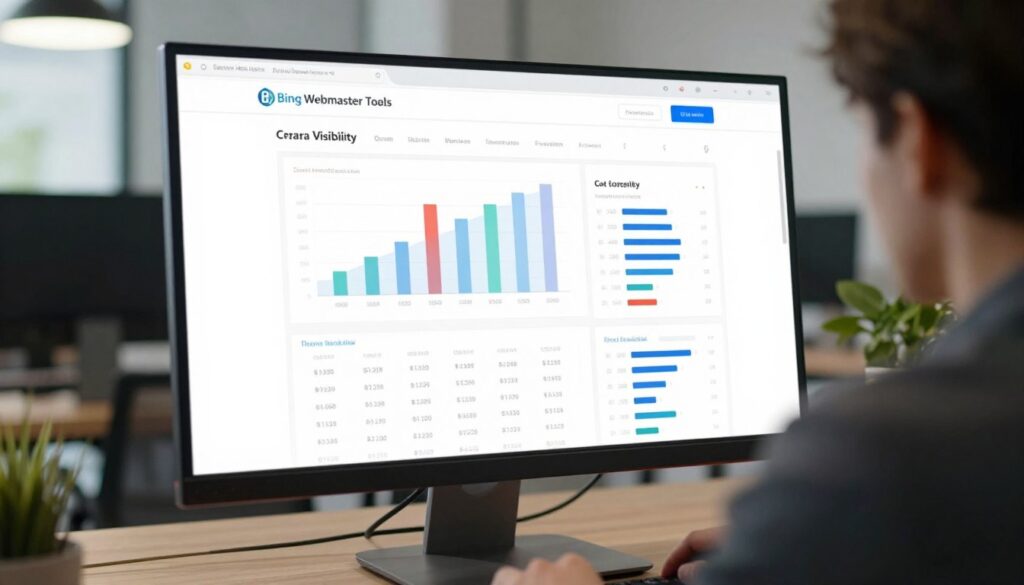
If you want to understand how your site appears in modern search, the Bing Webmaster Tools AI performance report offers a useful starting point. Microsoft introduced its AI Performance tab in beta to show citations from Microsoft Copilot, generated summaries, and select partner integrations.
This matters for your business in India. People now use generative systems for product ideas, local services, and fast answers. A citation can support discovery even when your page does not hold a standard position in Google Search or appear in Google Overviews.
Edward Sturm published a practical explanation of this report on February 16, 2026. In this guide, you will learn how to review cited pages, inspect grounding queries, compare time periods, and find gaps in your website’s visibility.
You will also see why a citation differs from a blue-link ranking. The free beta feature may give you useful insight without the cost of many paid SEO monitoring services. Use it as a helpful signal, not a final measure of search success.
Key Takeaways
- Track how your pages appear in Microsoft Copilot answers.
- Separate citations from traditional search rankings.
- Review queries that help systems reference your content.
- Compare periods to spot changes in visibility.
- Improve pages that earn few or no citations.
What the Bing Webmaster Tools AI Performance Report Shows
Search visibility now includes more than blue links. The performance report shows when your content supports a generated answer, giving you a new view of how search systems use your pages.
How citations differ from rankings
An AI citation means a system references your page as evidence. Traditional tracking focuses on rankings, impressions, and clicks, such as the data you know from Google Search Console or Search Console. A citation does not guarantee a visit or a higher position in search engines.
Total Citations counts sources shown during a selected period. Average Cited Pages measures the average number of unique pages cited each day. A grounding query shows a phrase used to retrieve cited content, but it represents only a sample.
Where your content can appear
The dashboard combines Microsoft Copilot, Bing summaries, and selected partner experiences. It offers a view similar to Google Overviews, but it does not measure every platform. Microsoft uses first-party data and respects robots.txt plus other controls set by website owners. This helps you study citation patterns without treating the results as a complete measure of online visibility.
How to Access AI Performance in Bing Webmaster Tools
Start with your verified property before you explore citation data. This keeps the dashboard tied to your own website and protects access to another company’s information.
Connect and verify your website
Open Bing Webmaster Tools and add your site. The setup feels similar to creating a verified property in Google Search Console. You can confirm ownership with a file upload, a DNS record, or an HTML tag.
Choose the method that fits your hosting setup. After verification, the property appears in your account. This step is essential for getting cited data linked to your own pages.
“Verification turns a general search view into a clear look at your own property.”
Open the AI Performance dashboard
Sign in again, select your verified property, and open the AI Performance tab. Microsoft currently labels this experience as beta. The performance report may take time to show fresh activity.
Scroll through the dashboard until you see Grounding Queries. These phrases show how systems connect your content with answers in Microsoft Copilot. Review the queries Bing surfaces, then select a cited URL to study its topic and intent.
This creates a practical path from checking whether you are getting cited to learning why specific pages appear.
How to Read Your Citation Data
Numbers in your dashboard need context before you act on them. The performance report shows source use, not a promise of rank, authority, or traffic. Treat each result as a helpful signal about how your website enters generated answers.
Total citations and average cited pages
Total Citations counts source references during the chosen period. It is not a position or traffic forecast. Average Cited Pages shows the daily number of unique URLs used from your site. A low average may mean that one strong page earns most references.
Page-level citation activity and visibility trends
Open page-level data to find the specific page that appears most often. This does not prove that it holds greater authority than uncited pages. Use the timeline to connect visibility changes over time with new content, seasonal demand, or system updates.
For clearer bing performance analysis, compare patterns rather than isolated totals. Your citation data offers directional evidence, while webmaster tools cannot confirm visits or rankings.
| Metric | What it measures | What it does not prove |
|---|---|---|
| Total Citations | Source references in selected answers | Ranking position or traffic |
| Average Cited Pages | Daily average of unique URLs | Page authority |
| Page activity | References for individual pages | Overall website quality |
| Timeline | Changes in visibility over time | A guaranteed long-term trend |
How to Find and Understand Grounding Queries
Grounding queries give you a practical way to see how generated search answers discover your website. In Bing Webmaster Tools, these grouped searches may use words that differ from your page copy.

What grounding queries reveal about AI searches
Open each query, search it, and check whether your relevant page appears in positions 1–3. This simple check shows whether your content matches what people seek. It also reveals new phrases for your SEO plan.
How intents and topics organize query data
Intent labels include Informational, Commercial, Local, Research, and Learn and Solve. They show whether users want facts, products, local discovery, or help with a problem. Topics group related searches, such as “solar panels,” “solar energy efficiency,” and “residential solar installation” under Solar Energy.
How to identify content coverage gaps
Use grounding queries to find missing answers. Add a short section when an existing page covers the subject. Two or three internal links from pages ranking in positions 1–5 may strengthen it.
Create a new page only when the query has a different purpose. One strong resource often serves readers better than a lot of thin blog posts. Clear coverage builds trust and authority over time.
How to Compare Citation Visibility Over Time
Trend checking becomes clearer when you place two time periods side by side. In Bing Webmaster Tools, the Compare feature overlays an earlier period on the current performance report. This view helps you spot gains and declines across pages and queries.
Using date ranges and the Compare feature
Begin with the current 30-day period and compare it with the previous 30 days. You can also choose custom dates, such as the weeks before and after a major content update. This makes it easier to judge whether a change lasts beyond one unusual day.
Several factors can shift citation activity. Model updates, competing pages, freshness signals, user demand, and partner refresh cycles may all affect your results. Seasonal interest can also change patterns for Indian retail, travel, or local services.
Compare wider Google Search trends for added context, but avoid treating one source as final proof. Review the report after meaningful updates, then note repeated movement in each query and page.
| Comparison | Best use | What to consider |
|---|---|---|
| Previous 30 days | Spot recent movement | Short-term demand |
| Custom dates | Measure an update | Seasonal effects |
| Google Search | Add market context | Different systems |
How to Improve Pages That Earn Few AI Citations
A low citation count does not always mean your topic lacks value. First, improve the existing page before creating more content. Match the main grounding query, answer it early, and remove details that distract readers.

Strengthening clarity, depth, and topical authority
Use clear headings, short explanations, comparison tables, and a focused FAQ. These elements help systems find and reuse key facts. Expand the page around the relevant grounding query instead of publishing several thin blog posts.
Check that the title, images, video, and text describe the same product, place, or idea. Consistent language reduces confusion and supports stronger SEO signals. If the specific page ranks below positions 1–3, add two or three natural internal links from related pages ranking in positions 1–5.
Supporting claims with evidence and current data
Add current figures, practical examples, and cited sources to important claims. Update prices, policies, statistics, and product details on a regular schedule. Fresh content gives search systems a clearer version to reference when your brand is getting cited.
Improve the useful page first; create new content only when the search intent changes.
How to Increase Your Website’s AI Citation Opportunities
Turn citation data into a simple workflow: improve relevance, connect related pages, refresh key facts, then review new signals in Bing Webmaster Tools. This approach helps you focus effort where it can improve visibility.
Improving internal links and page relevance
Link related pages with varied, natural anchor text. Use the exact grounding query in one relevant link when it fits. Then check whether the linked page answers the query early, clearly, and fully.
Keeping content fresh with IndexNow
IndexNow notifies participating search engines when you add, update, or remove a page. This can help systems find the current version faster. You can learn more at indexnow.org. For Indian local businesses, Bing Places for Business also helps keep addresses, hours, and contact details accurate.
Using Citation Share to guide content priorities
Citation Share shows the percentage of citations your site receives for one grounding query. Use it to prioritize strong or growing topics. It does not show competitors, traffic share, rankings, or content quality.
- Review grounding queries and page relevance.
- Refresh content and notify search engines.
- Compare Citation Share and repeat the cycle.
Conclusion
Your next SEO step can be simple: choose one useful page and make it easier to trust. This dashboard gives you first-party data on how pages support Microsoft Copilot, AI summaries, and partner experiences. It adds context beyond Google Overviews, but it does not show every user or every search.
Review grounding queries, intent, topics, and cited URLs. This grounding view connects visibility patterns with clear content choices, such as stronger evidence, fresher facts, and better internal links. You may learn a lot about what people need without assuming the data proves traffic or sales.
Compare date ranges to separate updates from seasonality, demand, freshness, and changing systems. Use Citation Share and page-level citations as direction, not a promise. Keep Google Search Console, analytics, and traditional SEO reporting in your workflow.
Then update the page through IndexNow and check its citations in the next period. Small, steady improvements can build useful visibility over time. The report helps you track citations, while these tools and your judgment keep the strategy focused on users.