

This guide explores practical strategies for Indian small businesses looking to harness the power of AI and automation, with a focus on accessible, cost-effective solutions tailored to the Indian market. Whether you’re a manufacturing unit in Gujarat, a tech startup in Bangalore, or a retail business in Jaipur, these tools can transform your operations and position your business for success in an increasingly digital economy.
Current Challenges Facing Indian SMEs
Indian small businesses operate in a unique environment with specific obstacles that can limit growth potential. Understanding these challenges is the first step toward identifying how AI & automation tools can provide effective solutions.
Resource Limitations
Most Indian SMEs operate with tight budgets and limited manpower. A typical small business in India might have 5-15 employees handling multiple responsibilities, leading to inefficiencies and burnout. With restricted access to capital, investing in traditional enterprise-grade systems has historically been out of reach.
Operational Inefficiencies
Manual processes still dominate many Indian SMEs, from inventory management to customer service. Paper-based record-keeping, manual data entry, and unstructured communication channels create bottlenecks that slow growth and increase error rates.
Scaling Difficulties
When Indian businesses attempt to scale, they often face a critical dilemma: hiring more staff increases overhead substantially, while existing teams struggle to handle growing workloads. This creates a growth ceiling that’s difficult to break through using traditional approaches.
Market Competition
With larger enterprises adopting advanced technologies, SMEs face increasing pressure to match service levels and operational efficiency. The gap between technologically-enabled businesses and those relying on manual processes continues to widen in the Indian market.
How AI & Automation Tools Transform Indian SMEs
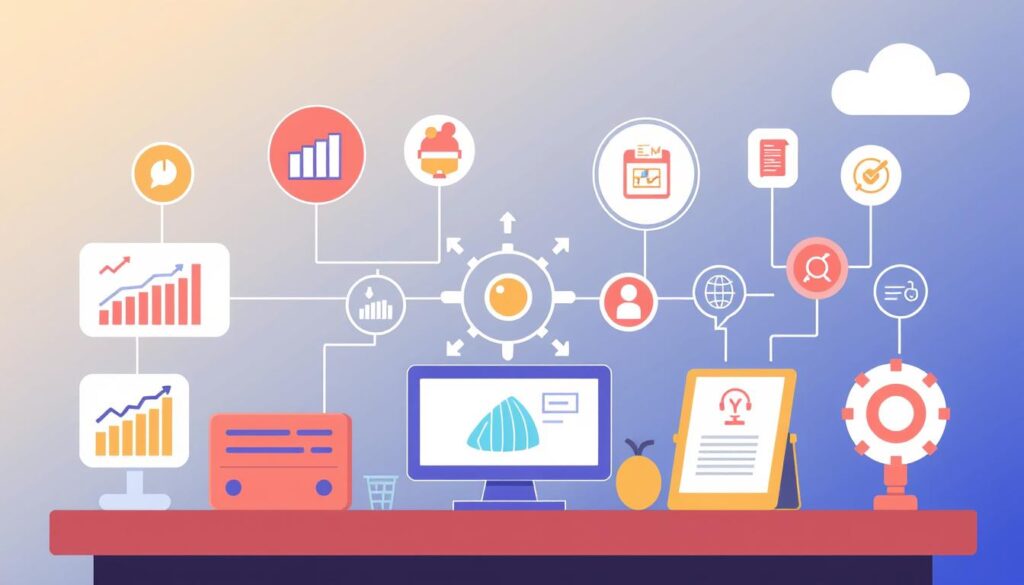
Before diving into specific tools, it’s important to understand the transformative impact AI and automation can have on Indian small businesses. These technologies aren’t just about reducing manual work—they fundamentally change how businesses operate and compete.
Benefits of AI & Automation for Indian SMEs
- Reduce operational costs by 25-40% through workflow automation
- Scale customer service capabilities without proportional hiring
- Improve decision-making with data-driven insights
- Enhance marketing effectiveness through personalization
- Free up valuable human resources for strategic initiatives
- Compete more effectively with larger enterprises
Challenges to Consider
- Initial implementation learning curve
- Integration with existing systems
- Data privacy and security considerations
- Staff adaptation and training requirements
- Selecting the right tools from many options
The good news is that today’s AI and automation tools are increasingly designed with small businesses in mind, offering affordable pricing tiers, simplified interfaces, and support for Indian languages and business practices.
Automating Customer Service for Indian SMEs

Customer service automation represents one of the most accessible and high-impact starting points for Indian SMEs looking to implement AI tools. With the right approach, even small businesses can provide 24/7 support, handle high volumes of inquiries, and maintain consistent service quality.
AI-Powered Chatbots for Indian Businesses
Chatbots have evolved significantly, now offering multilingual support and integration with popular platforms like WhatsApp and Facebook Messenger—channels widely used by Indian consumers.
Top Chatbot Solutions for Indian SMEs
- Haptik – Indian-built conversational AI platform supporting multiple regional languages including Hindi, Tamil, and Bengali. Ideal for businesses with diverse customer bases across India.
- Gupshup – Offers ready-made templates for common Indian business scenarios and deep WhatsApp integration, which is crucial given WhatsApp’s dominance in India.
- Freshchat – Developed by Indian company Freshworks, it combines AI chatbots with live chat and offers pricing suitable for small businesses.
These tools help SMEs handle customer inquiries, process orders, provide product information, and collect feedback—all without requiring additional staff.
Voice Automation for Indian Contexts
Voice-based automation is particularly valuable in the Indian market, where many customers prefer speaking over typing, especially in regional languages.
Ringg AI stands out for Indian SMEs by supporting 15+ regional languages and enabling businesses to automate outbound calls, appointment reminders, and post-purchase confirmations. This is especially useful for businesses in education, healthcare, and financial services where voice communication is preferred.
Streamlining Operations with Workflow Automation
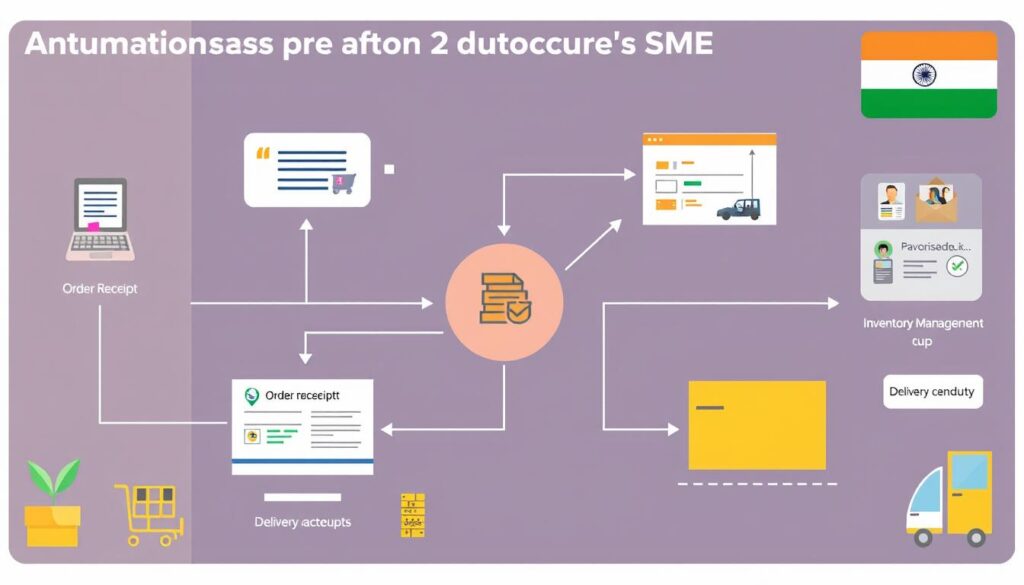
Operational inefficiencies drain resources and limit growth potential for Indian SMEs. Workflow automation tools help streamline internal processes, reduce manual work, and minimize errors—creating a foundation for scalable growth.
No-Code Workflow Automation
Modern workflow tools require minimal technical expertise, making them accessible to Indian SMEs without dedicated IT departments.
Kissflow
Developed in India, Kissflow allows businesses to digitize and automate routine internal processes such as leave approvals, expense claims, and inventory tracking without requiring technical expertise.
Best for: HR processes, approval workflows, and internal operations
Zoho Creator
Another Indian-developed platform that enables SMEs to build custom applications and automate business processes through a visual interface. Its pricing is tailored for the Indian market.
Best for: Custom business applications, data management, and reporting
Cross-Platform Integration Tools
For businesses using multiple software systems, integration tools help create seamless workflows across platforms.
Zapier for Indian SMEs
Zapier connects commonly used apps like Gmail, Google Sheets, accounting software, and CRMs to create automated workflows. For example, when a new lead fills out your website form, Zapier can automatically:
- Add their information to your CRM
- Send a personalized welcome email
- Create a task for your sales team
- Add their details to your marketing list
This eliminates hours of manual data entry and ensures consistent follow-up without adding staff.
Enhancing Marketing with AI-Driven Analytics

Marketing automation tools help Indian SMEs compete more effectively by enabling data-driven decision making, personalized customer engagement, and efficient campaign management—even with limited marketing staff.
AI-Powered Content Creation
Content creation is often a bottleneck for Indian SMEs with small marketing teams. AI tools can help generate and optimize various types of content.
Copy.ai and Jasper
These AI-powered content writing tools help businesses create marketing copy, blog posts, emails, and product descriptions. They’re ideal for SMEs that lack in-house content teams but need to maintain a consistent digital presence.
Many Indian ecommerce and service businesses use these tools to generate multilingual content for their ads, websites, and social channels.
Pictory and Lumen5
Video creation tools that convert blog posts or product descriptions into short videos, promotional clips, or explainer reels without requiring design expertise.
These tools are especially helpful for Indian brands that want to create visual content for platforms like Instagram, YouTube, and Facebook but lack design or production resources.
Customer Analytics and Engagement
Understanding customer behavior and personalizing marketing efforts is crucial for growth in competitive markets.
CleverTap
An Indian-founded customer engagement platform that uses AI to analyze user behavior and automate personalized marketing campaigns. It helps SMEs:
- Segment customers based on behavior patterns
- Predict customer churn before it happens
- Automate personalized messages across channels
- Optimize campaign timing for maximum engagement
CleverTap’s analytics help businesses understand what drives customer decisions, allowing for more effective marketing with smaller budgets.
Accelerating Sales with AI-Powered CRM Tools
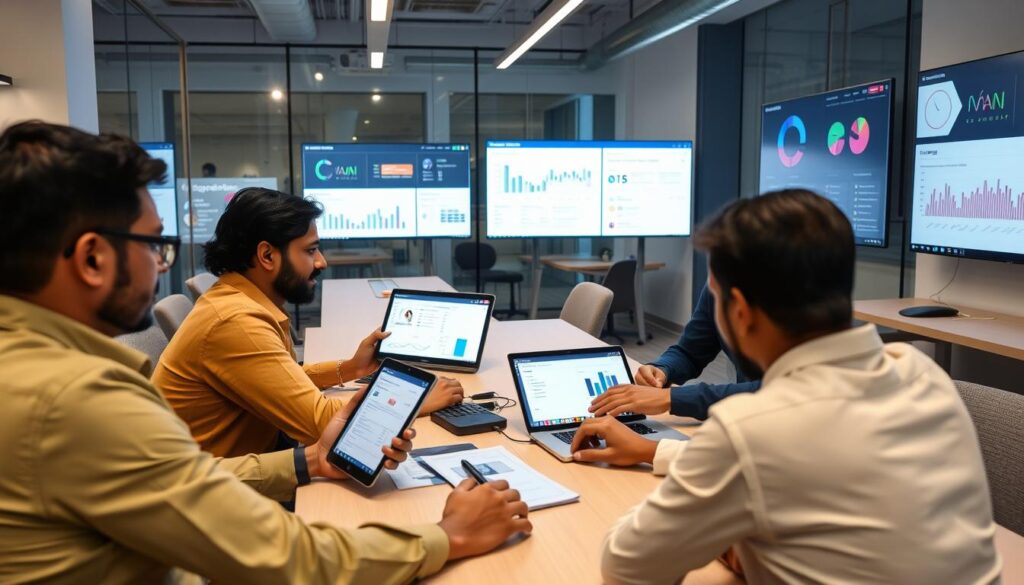
Sales automation tools help Indian SMEs identify promising leads, streamline follow-ups, and close deals more efficiently—enabling growth without proportionally increasing sales headcount.
AI-Enhanced CRM Systems
Modern CRM systems now incorporate AI to provide insights and automate routine sales tasks.
Zoho CRM with Zia
Zoho CRM is a widely used CRM tool developed in India. Its AI assistant, Zia, helps businesses score leads, predict deal closures, and detect anomalies in the sales funnel.
The platform integrates seamlessly with other Zoho applications and supports Indian payment gateways, tax systems, and compliance tools. Its affordability and localization make it a preferred CRM solution for Indian SMEs.
Freshsales
Another CRM platform developed by an Indian company—Freshworks. Its AI assistant, Freddy, offers lead scoring, behavior tracking, and predictive analytics to help sales teams prioritize prospects and close deals faster.
Freshsales is suitable for businesses that want to combine email, telephony, and workflow automation into one unified sales system. Its user interface is clean, and it’s built to scale with growing teams.
“After implementing Zoho CRM with Zia, our sales team’s productivity increased by 35%, and our conversion rate improved by 28% within just three months.”
Real-World Success Stories: Indian SMEs Transformed by AI
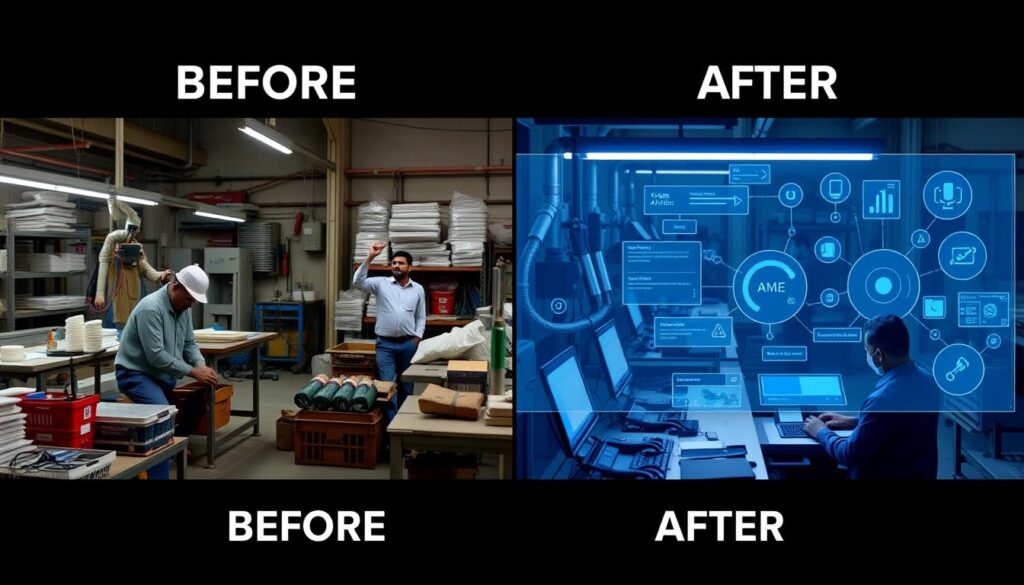
These case studies demonstrate how Indian SMEs across different sectors have successfully implemented AI and automation tools to overcome specific challenges and achieve measurable growth.
Manufacturing Sector: Precision Components Ltd., Pune
This small manufacturing unit with 25 employees faced challenges with inventory management and production scheduling, leading to delays and inefficiencies.
AI Implementation:
- Deployed an AI-powered inventory management system that predicted stock requirements based on historical data and current orders
- Implemented production scheduling automation that optimized machine utilization
- Used IoT sensors connected to an AI analytics platform to monitor equipment performance
Results:
- Reduced inventory costs by 32% within six months
- Improved on-time delivery from 78% to 96%
- Decreased machine downtime by 41%
- Achieved 27% growth in production capacity without adding equipment
Retail Sector: Fashion Bazaar, Jaipur
This family-owned retail business with three physical stores and an online presence struggled with customer service scalability and personalized marketing.
AI Implementation:
- Deployed Gupshup chatbot for WhatsApp customer service, handling order status inquiries and common questions
- Implemented CleverTap for customer segmentation and personalized marketing campaigns
- Used AI-powered inventory management to optimize stock across stores
Results:
- Reduced customer service response time from hours to minutes
- Increased repeat purchase rate by 42% through personalized recommendations
- Improved inventory turnover by 35%
- Achieved 53% growth in online sales within one year
Addressing Implementation Challenges
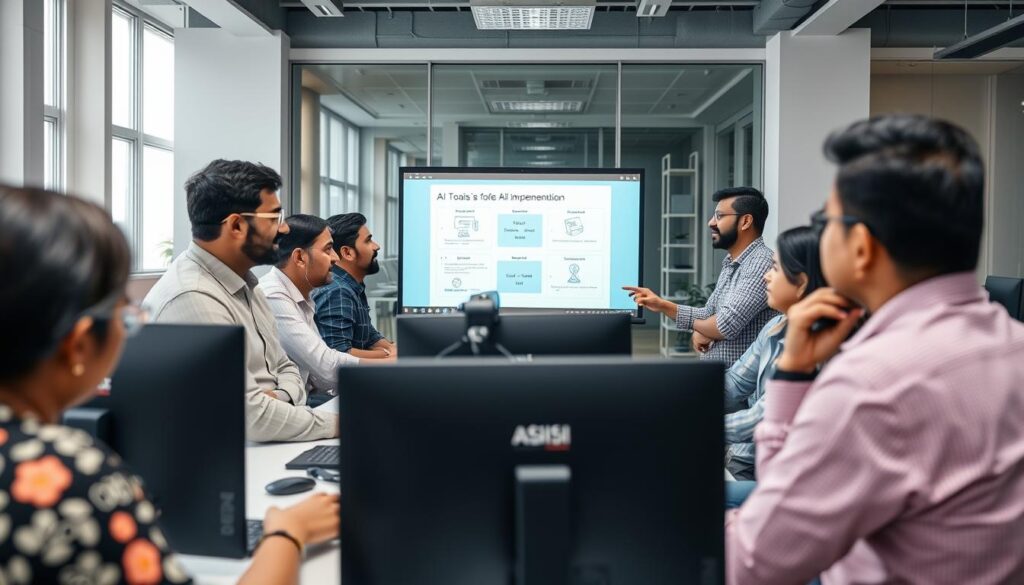
While the benefits of AI and automation are clear, Indian SMEs often face specific challenges when implementing these technologies. Understanding these obstacles and having strategies to overcome them is crucial for successful adoption.
Cost Considerations and Solutions
Initial investment concerns often deter Indian SMEs from adopting AI tools, but several approaches can make implementation financially viable.
Government Schemes and Subsidies
The Indian government offers various programs to support technology adoption by SMEs:
- Digital MSME Scheme provides subsidies for cloud computing and other digital tools
- Technology Upgradation Fund Scheme (TUFS) offers capital subsidies for technology investments
- SIDBI’s Digital Transformation initiatives provide financial assistance for digitalization
Phased Implementation Approach
Rather than implementing all tools simultaneously, a phased approach reduces initial investment:
- Start with one high-impact area (e.g., customer service automation)
- Use ROI from initial implementation to fund subsequent phases
- Leverage free tiers and trials to test tools before committing
- Consider Indian-developed alternatives that often offer more competitive pricing for the local market
Skill Gaps and Training Solutions
Technical expertise limitations can hinder effective implementation and utilization of AI tools.
Upskilling Resources for Indian SMEs
- MSME Technology Centers offer specialized training programs for digital tools adoption
- National Skill Development Corporation (NSDC) provides AI and automation courses tailored for SMEs
- Industry associations like NASSCOM and CII regularly conduct workshops on emerging technologies
- Tool-specific webinars and documentation from vendors often include India-specific use cases
Many AI tool providers now offer simplified interfaces specifically designed for non-technical users, making adoption easier for Indian SMEs with limited technical expertise.
Implementation Roadmap for Indian SMEs
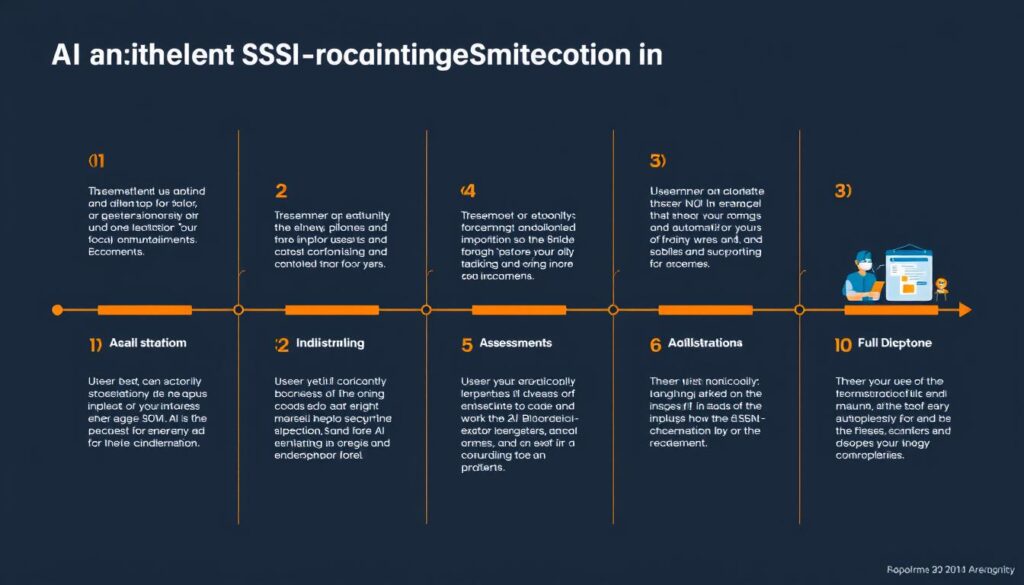
A structured approach to implementing AI and automation tools increases the likelihood of successful adoption and positive ROI. This roadmap is designed specifically for Indian SMEs with limited resources and technical expertise.
Phase 1: Assessment (2-4 Weeks)
- Identify specific operational bottlenecks and inefficiencies
- Document current workflows and processes in detail
- Set clear, measurable objectives for automation
- Evaluate available budget and resources
- Research tools specifically suited for Indian business context
Phase 2: Selection & Planning (2-3 Weeks)
- Shortlist tools based on requirements and budget
- Test free trials with actual business scenarios
- Develop implementation timeline with milestones
- Identify team members for training and implementation
- Create contingency plans for potential challenges
Phase 3: Implementation (4-8 Weeks)
- Start with one department or process as a pilot
- Conduct necessary training for team members
- Configure tools for Indian business requirements
- Develop standard operating procedures
- Implement feedback mechanisms for continuous improvement
Need Expert Guidance for Your AI Implementation?
Our team specializes in helping Indian SMEs select and implement the right AI and automation tools for their specific needs. Book a free 30-minute consultation to discuss your business challenges and explore tailored solutions.
Future Trends: What’s Next for Indian SMEs
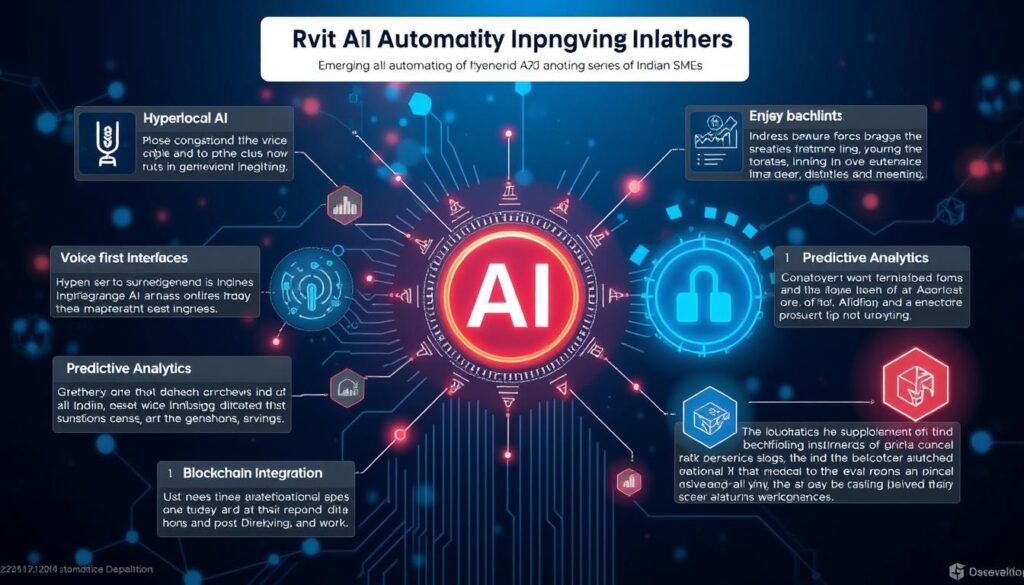
The AI and automation landscape continues to evolve rapidly, with several emerging trends particularly relevant for Indian SMEs. Understanding these developments helps businesses prepare for future opportunities and stay ahead of the competition.
Hyperlocal AI Solutions
AI tools are increasingly being developed with specific regional and local Indian contexts in mind, offering better language support, cultural understanding, and business practice alignment.
Expect to see more AI solutions that understand not just Hindi and major regional languages, but also dialects, cultural nuances, and hyperlocal market conditions—making them more effective for businesses serving specific regions of India.
Voice-First Interfaces in Indian Languages
With India’s diverse linguistic landscape and varying literacy levels, voice-based AI interfaces are gaining prominence. These tools allow businesses to reach wider audiences and simplify operations for staff with limited technical literacy.
Voice-first tools supporting multiple Indian languages will become increasingly important for customer service, field operations, and internal processes, especially for businesses operating beyond major metropolitan areas.
Predictive Analytics for SMEs
As data collection becomes more streamlined, even small businesses will be able to leverage predictive analytics to anticipate market trends, customer behavior, and operational needs.
These capabilities, once reserved for large enterprises with data science teams, are becoming accessible to SMEs through simplified interfaces and industry-specific predictive models tailored for the Indian market.
Conclusion: Taking the First Step

The adoption of AI & automation tools for Indian SMEs represents a significant opportunity to overcome traditional growth limitations and compete more effectively in both domestic and global markets. By strategically implementing these technologies, even small businesses with limited resources can achieve operational excellence, enhanced customer experiences, and sustainable growth.
The key to success lies not in attempting to implement everything at once, but in starting with high-impact areas aligned with your specific business challenges. Whether it’s streamlining customer service with chatbots, automating repetitive workflows, or enhancing marketing with AI-driven analytics, each step toward automation creates compound benefits over time.
As we’ve seen from the case studies of Indian SMEs across various sectors, the results can be transformative—not just in terms of efficiency and cost savings, but in enabling entirely new capabilities and growth trajectories that were previously unattainable.
Ready to Transform Your Business with AI?
Our team of experts specializes in helping Indian SMEs implement the right AI and automation tools for their specific needs and budget. Get a personalized assessment and implementation plan tailored to your business.
Note: This article is available in multiple Indian languages including Hindi, Bengali, Tamil, Telugu, Marathi, and Gujarati. To request a translated version, please contact us through the form above or email contact@conew.in